ProFlex® is designed to optimize your time, ignite your investment IQ, and maximize your financial potential.
Proflex Wk Apr 13-17 — J-Shape Recovery, Ceasefire Countdown, Earnings Begin
|
Proflex Market Update - Week 13-17 April, 2026 J-Shape Recovery | Ceasefire Expires Wednesday | Earnings Season Begins
"The market went from oversold to overbought in two weeks without a single pullback. That's not a V-shape recovery — that's a J-shape, and J-shapes don't have seatbelts."
— Proflex Panel
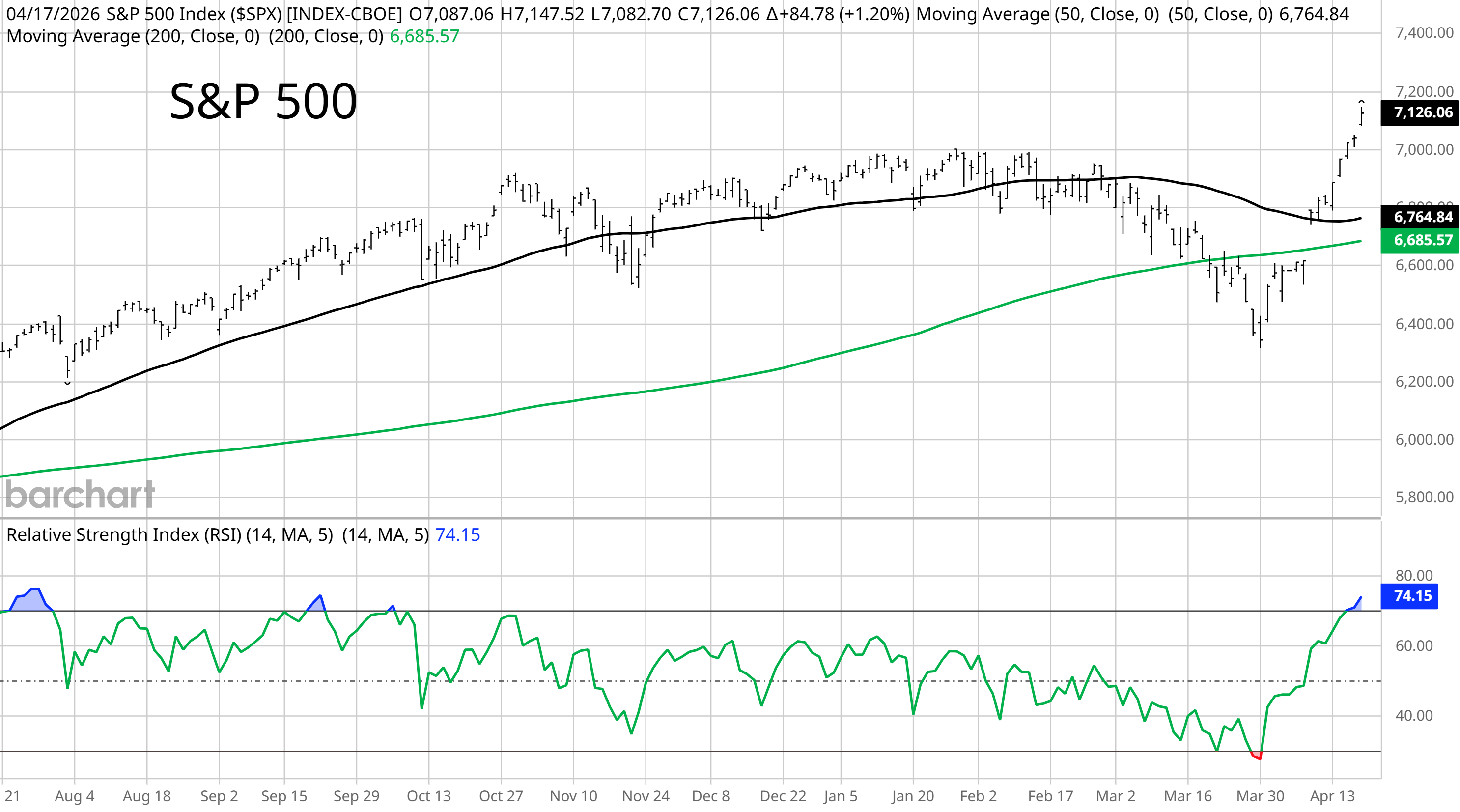
The S&P 500 closed Friday at a new all-time high after surging 4.5% in a single week. The VIX collapsed to 17.48. And literally no one expected any of this two weeks ago. What we're witnessing is unprecedented.
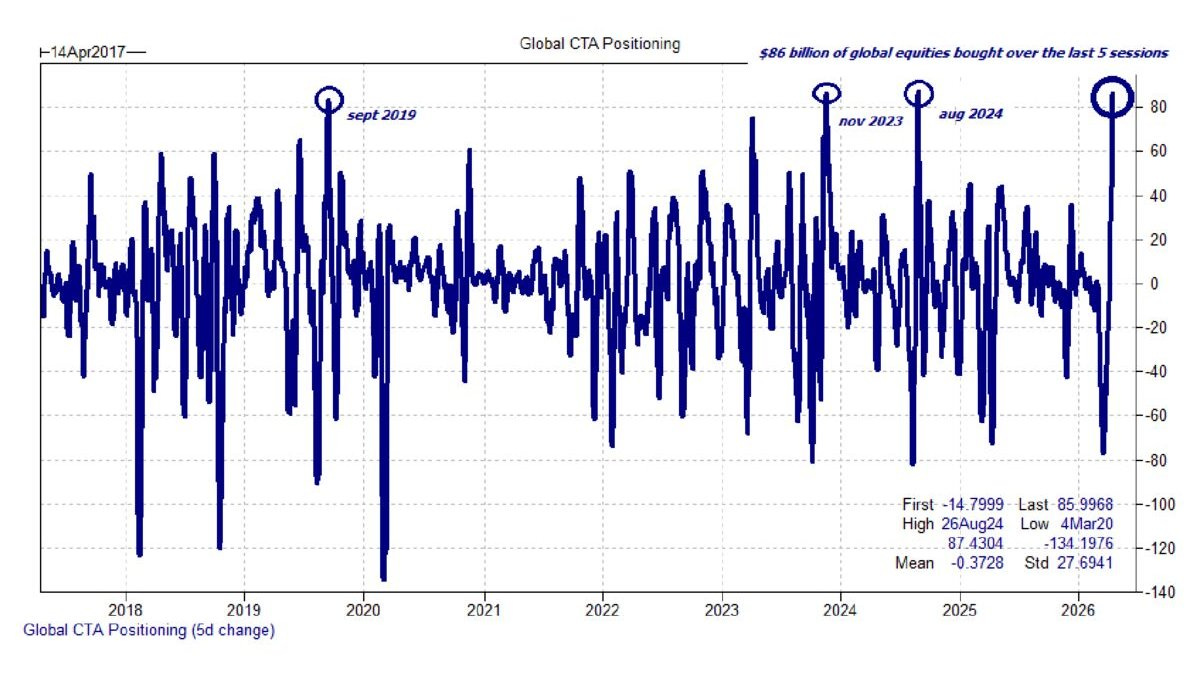
As Raman noted in our weekly discussion: "We've gone from the 100th percentile of the move to way beyond it — this is not something you can even compare to previous recoveries." The catalyst was Iran de-escalation. After weeks of war pricing, a fragile two-week ceasefire (announced April 8) gave CTAs and systematic strategies the green light to unwind massive short positions. The question now is whether a market that went from panic to euphoria in 14 days can hold these levels when earnings start arriving and a ceasefire hangs by a thread.
Insights from Macro CallThis week's call zeroed in on why this rally is structurally different from any V-shape recovery we've seen before. Raman highlighted the RSI compression — the speed at which markets flipped from deeply oversold to overbought without a single pullback is historically unprecedented. A critical observation was the K-shaped nature of this recovery. While NVIDIA and the AI leaders have surged past previous highs, Tesla remains well below its all-time high, Microsoft is still recovering, Meta has yet to catch up, and Apple hasn't reclaimed its peak. The rally breadth is extremely thin as a handful of AI momentum names are dragging the indices higher while the rest of the market trails. You can watch the complete recording here: Key Drivers This WeekThe Unprecedented J-Shape: Why This Rally Has No Historical Parallel This matters because of who is driving it.
Short covering cascaded through the options chain, forcing market makers to delta-hedge by buying more stock. The result is self-reinforcing momentum that has little to do with earnings revisions or economic fundamentals. JPMorgan's flow data shows leveraged positioning has rebuilt to levels that historically precede corrections. Goldman's systematic strategy monitor flags the current rally as being in the 95th+ percentile of momentum acceleration.
Proflex View: We've overshot the previous all-time high on pure positioning mechanics, and the market needs to digest this through either time (consolidation) or price (pullback). The opportunity lies in what hasn't moved yet: the K-shape laggards that will catch up once the momentum leaders finally pause. Ceasefire Countdown: 48 Hours to Resolution or Escalation The two-week US-Iran ceasefire expires Wednesday, April 22, and the weekend brought bad news. Iran reversed its Hormuz stance after briefly signaling commercial lanes would reopen, it re-imposed restrictions, citing the continued US naval blockade. Brent crude sits at ~$95/barrel, already reflecting partial de-escalation. • Extension case: Both sides agree to extend the ceasefire while talks continue in Islamabad. Oil drops to $85-88. Market rallies another 2-3%. • Escalation case: Ceasefire expires without renewal. Hormuz fully closes again. Brent surges back above $105. S&P tests 6,800. • Resolution case: Comprehensive deal framework announced. Oil drops below $80. Market rips to 7,300+. The critical variable is not public statements as Iran's Pezeshkian has made contradictory declarations. Watch the tanker transit count through Hormuz. That's the real-time scoreboard.
Proflex View: We believe the base case is a ceasefire extension: neither side benefits from a return to full conflict heading into US earnings season and Iran's internal political realignment. But the market is pricing almost no risk premium for the escalation scenario, which makes this week's resolution binary and dangerous for anyone fully long.
Earnings Season: The Valuation Test at the Worst Possible Time Over 100 companies report this week, including a stacked Wednesday with Tesla, IBM, ServiceNow, and Vertiv, followed by Intel on Thursday. The setup is uncomfortable: two weeks ago, the same stocks were trading at post-crash valuations where any decent earnings print would have been rewarded.
TSMC's Q1 report (April 16) provided the AI sector's clearest signal: revenue of $35.9 billion (up 6.4% sequentially), profit jumping 58%, and management guiding for 30%+ full-year revenue growth. Advanced AI chips accounted for 75% of wafer revenue.
Proflex View: Earnings season arrives at an overbought market with thin breadth and leveraged positioning. Any miss or guidance cut from a momentum leader (especially Tesla on Wednesday) could trigger the pullback. Conversely, strong beats from the K-shape laggards (Intel, IBM) could broaden the rally and make it healthier. Watch breadth, not just levels.
AI's Infrastructure Wall: 12 States Push Back While TSMC's earnings validated AI demand, a parallel story is building that markets haven't priced in. More than 300 data center-related bills have been introduced across 30 states in the first six weeks of 2026 alone. Maine is moving toward a temporary ban on new data center development through 2027. California, Ohio, and Utah have enacted laws forcing data centers to fund their own infrastructure. The paradox is striking: hyperscaler capex is projected at $6.7 trillion globally to meet long-term AI demand, yet the physical ability to deploy that capital is running into state-level resistance over power grid strain, water consumption, and residential rate hikes. One-third of hyperscalers now plan to build fully self-powered campuses by 2030 — in effect, becoming their own utility companies. This adds cost, delays timelines, and changes the economics of AI scaling.
Proflex View: The infrastructure bottleneck is the underpriced risk in the sector. Energy access has replaced chip supply as the binding constraint. When hyperscalers report, listen less for revenue beats and more for commentary on power procurement, state permitting timelines, and self-powered infrastructure plans.
Bitcoin's Breakout and the Hard Asset Reset Bitcoin has broken decisively above the $75,000 zone, a level Proflex highlightes as technically significant. Gold, meanwhile, has pulled back down from its $5,200+ highs — as the inflationary energy premium that was supporting it has partially unwound with lower oil prices. The divergence is telling: Bitcoin is moving on its own liquidity cycle (ETF stabilization, institutional accumulation), while precious metals are still tethered to the oil-war-inflation narrative.
Proflex View: The hard asset complex is bifurcating as crypto is leading because its next catalyst (ETF inflows, halving cycle maturation) is independent of geopolitics, while gold and silver need either a ceasefire collapse or a genuine Fed pivot to reignite. We remain constructive on both, but Bitcoin has the better near-term setup.
🔍 What We're Watching • Wednesday, April 22: Iran-US ceasefire expiration — the single most important macro variable this week • Wednesday, April 22: Tesla and IBM earnings — the breadth test for this rally • Thursday, April 23: Intel earnings — can the value side of semis participate? • FOMC meeting April 29-30: No change expected (99% probability), but dot plot implications for year-end cuts • Hyperscaler earnings (April 28-29): The real AI capex demand signal and infrastructure commentary
Proflex All-Access: Your Market Compass
Explore the financial markets with Proflex All-Access, your comprehensive resource for deeper market understanding and active participation. This premium service offers subscribers exclusive insights and actionable investment advice, giving you a significant edge in various market conditions.
Proflex All-Access provides detailed analyses and recommendations to optimize your investment strategy. Our specialized newsletters include:
• Growth Gazette (Contains Crypto Pulse) : Aimed at achieving above-market returns for aggressive portfolio growth.
• Income Insider: Focused on conservative strategies and income generation for yield-seeking investors.
ProFlex® by Blockstart Research
Legal Disclosures ProFlex® by Blockstart Research, the premium newsletter product series, provides informational and educational content only and does not offer personalized investment advice or establish a fiduciary relationship. While we rely on reliable sources and research, the information is not tailored to individual financial situations. Readers are urged to consult qualified financial professionals before making investment decisions. We do not guarantee the accuracy, completeness, or timeliness of the information and are not responsible for any investment decisions based on this newsletter. Investing carries risks, and past performance doesn't predict future results. By accessing this newsletter, you acknowledge that we are not liable for actions or decisions resulting from its content. Please conduct due diligence and seek professional advice as needed.
|
Insight/2026/04.2026/04.17.2026_Earnings%20Insight/01-sp500-earnings-above-inline-below-estimates-q1-2026.png?width=672&height=384&name=01-sp500-earnings-above-inline-below-estimates-q1-2026.png)
Proflex Institutional Research Series
ProFlex® is designed to optimize your time, ignite your investment IQ, and maximize your financial potential.