ProFlex® is designed to optimize your time, ignite your investment IQ, and maximize your financial potential.
Proflex Growth Gazette — November Edition
|
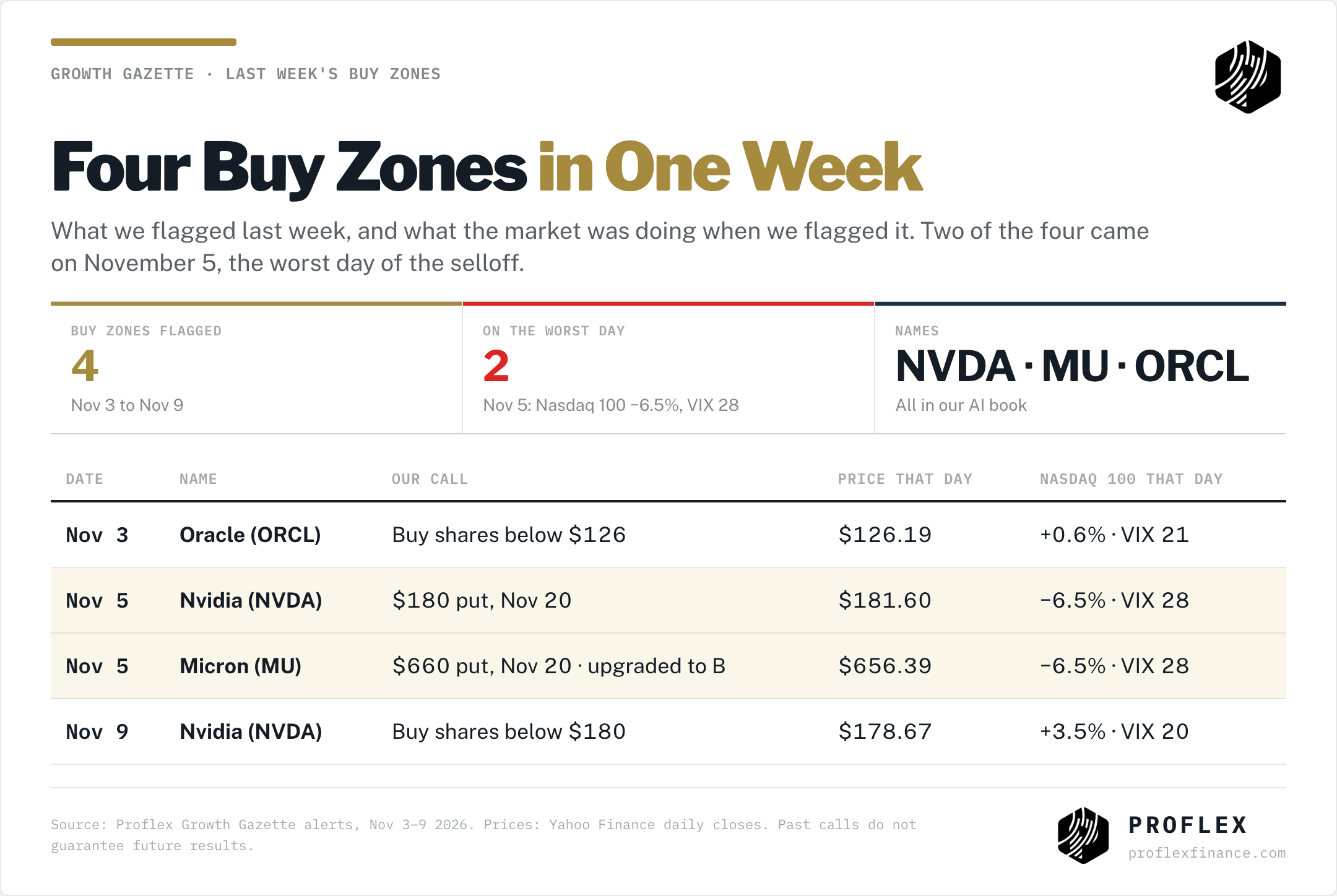
Stocks covered in this edition: (*Download model portfolio file at end of this newsletter for the full list of open positions) Dear Reader, Welcome to the November edition of Growth Gazette. Here is the month in one line. The AI bubble did not burst. It let out air. Our focus is to guide you when there is blood on the street, when it looks like nothing can go right. Those are the moments we look for opportunities and call out buy zones. Last week we called out four buy zones, two of them on November 5, the worst day of the selloff:
We saw this selloff as an opportunity, not a reason to run. We hope you benefited from our trades in this period. We are already booking some of them, and we will keep guiding you through the swings, in both directions.
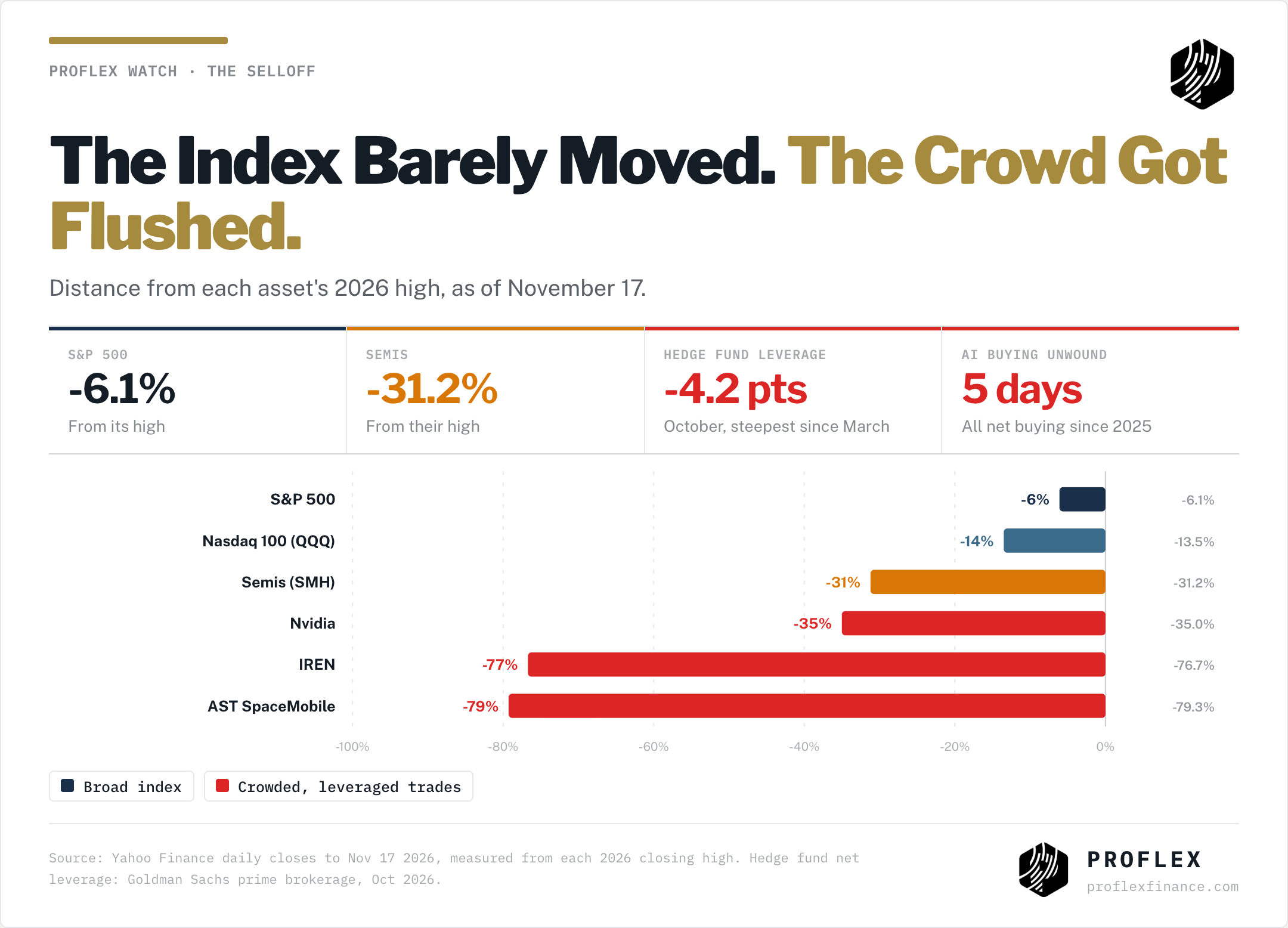
Before we get to trades and positions, here is what we think is going on, and what we are doing about it. 🧭 Our Thesis This Month1. This was a sentiment selloff, not a business problemOn November 5 the Nasdaq 100 fell 6.4%, its worst day since April 2025. Chip stocks are now down about 31% from their high and Nvidia is down 35%. Yet the S&P 500 is only about 6% below its record. That gap tells you what happened. The economy did not break and AI demand did not crack. Borrowed money left the most crowded trades in the market, all at once. Hedge funds cut their borrowing in October by the most since March, and crypto traders were forced out of about $12.5 billion of positions. When people are forced to sell, they sell what is easiest to sell first, and that means the biggest AI names. 2. The businesses kept getting better while the stocks fellNvidia's profit forecasts went up. Google Cloud revenue doubled. Broadcom's AI revenue more than tripled. Tesla beat on deliveries. The prices fell anyway. When prices and results move in opposite directions, the price usually catches up with the results, not the other way round. 3. The froth is gone, and that makes the AI boom more durableThe over-excitement of the second quarter has been washed out. The AI leaders are now priced like ordinary companies while they keep growing like extraordinary ones. Nvidia trades at about the same price as in September 2025, while its earnings have roughly doubled.
4. What we are doing about it
Let's get into it. 📊 Air Out, Not Burst: November Performance Update2026 So Far: Up 11.6%, About 1.6x the S&P 500As of the November 17 close, the Growth Gazette portfolio is up 11.57% in 2026, a profit of $15,270 on $132,000 allocated. The S&P 500 is up 7.23% over the same period. That puts us at about 1.6x the index.
While prices swung hard in both directions in October, we booked six options trades for profit and rolled our way through the rest. Trades We Closed for a Profit
Where Every Position Stands, and What Comes NextFor each holding: what we are doing, why, and what to watch next. Nvidia (NVDA) — Buy. Our top rating, AA (up to 32%). Q3 beat and raised: revenue $115.8 billion, up 103%, and Q4 guided to $130 billion. The stock still trades under 10x next year's earnings, cheaper than it has been in years. → Watch next: A close back above $165, and the $210 put at the November 20 expiry. Broadcom (AVGO) — Buy. Rating B (up to 8%). AI revenue is up 221% and much of it is already locked in through multi-year customer deals, which makes it one of the safest ways to own AI chips. → Watch next: Earnings in December. Alphabet (GOOG) — Buy at today's price. Rating B (up to 8%). The stock fell 12% after earnings even though Google Cloud revenue doubled and its order book reached $561 billion. We think the market is focusing on the wrong line. → Watch next: How quickly businesses adopt Gemini 3. Micron (MU) — Buy at today's price. Upgraded to Rating B (up to 8%). The stock is 41% off its high, yet memory prices are still rising and its 2026 production of AI memory is already sold out. → Watch next: Earnings in mid December. SpaceX (SPCX) — Buy if you own less than your target. We are entering by selling puts. Revenue grew 161% last quarter, and AI is now its biggest business. Selling a put pays us while we wait for a better entry price. On November 16 we rolled down to the $135 put (Dec 18) for a credit, lowering our breakeven to about $128. → Watch next: The December 18 put expiry. Gold miners (GDX) — Buy again. We are entering by selling puts. The miners have cooled with gold, but they still make strong profits with gold near $3,900. → Watch next: The November 20 put expiry and the Fed's December meeting. Bitcoin (BTC, IBIT) — Buy zone below $70,000. Rating B (up to 8%). Bitcoin broke its 200 day line on November 12 and fell to about $64,700 as leveraged longs were forced out. It now sits about 9% above its 2026 low and 12% below its 200 day average. The reward from here outweighs the risk. → Watch next: A close back above about $72,700 (the 200 day) is the first target; $78,600 (the 50 day) is the second. Oracle (ORCL) — Buy only below $126. Rating C (up to 4%). A good business, but it borrows heavily to build data centers, so we only want it at a lower price. → Watch next: Earnings in December. Meta, Apple, Uber — Hold. We would add Meta below $630 and Uber below $66. → Watch next: Holiday ad spending for Meta, and Apple's holiday-quarter results in January. Ciena, Nokia, AMD, SK hynix — Hold, not adding. These fell with the crowd, not because the businesses weakened. → Watch next: Ciena's earnings in early December. Tesla (TSLA) — Hold. Rating A (up to 16%). Deliveries beat expectations, and paid self-driving subscriptions are up from about 1 million to 1.7 million. → Watch next: Robotaxi expansion and fourth-quarter deliveries. HIMS, ASTS — Exit, November 18. Both were Rating C (up to 4%). Both disappointed, and the market is not paying for growth that is years away. The money moves to Nvidia. IREN — Hold, under review. Rating C (up to 4%). Priced for failure. Sentiment is overly negative while the fundamentals show the story has not gone away. → Watch next: How the market values powered data center capacity after CoreWeave's results.
🔍 Proflex Watch: The Macro PictureOur View in One Line: Macro Beat the Fundamentals This Month. That Does Not Last.Here is the whole month in one sentence. The businesses kept beating, and the stocks kept falling. Nvidia's earnings estimates went up. Google Cloud doubled. Broadcom's AI revenue more than tripled. Tesla beat on deliveries and earnings. All of their share prices fell anyway. When prices and fundamentals go in opposite directions, the cause is almost always positioning, leverage and sentiment, not the businesses. That is what we saw this month, and we can show it with numbers. This Was a Sentiment Selloff. Here's the Proof.Look at who sold and how fast.
When leverage comes out, margin calls force people to sell whatever is liquid. The most liquid, most crowded names in the world are the AI leaders. That is why Nvidia is 35% below its high while the S&P 500 is 6% below.
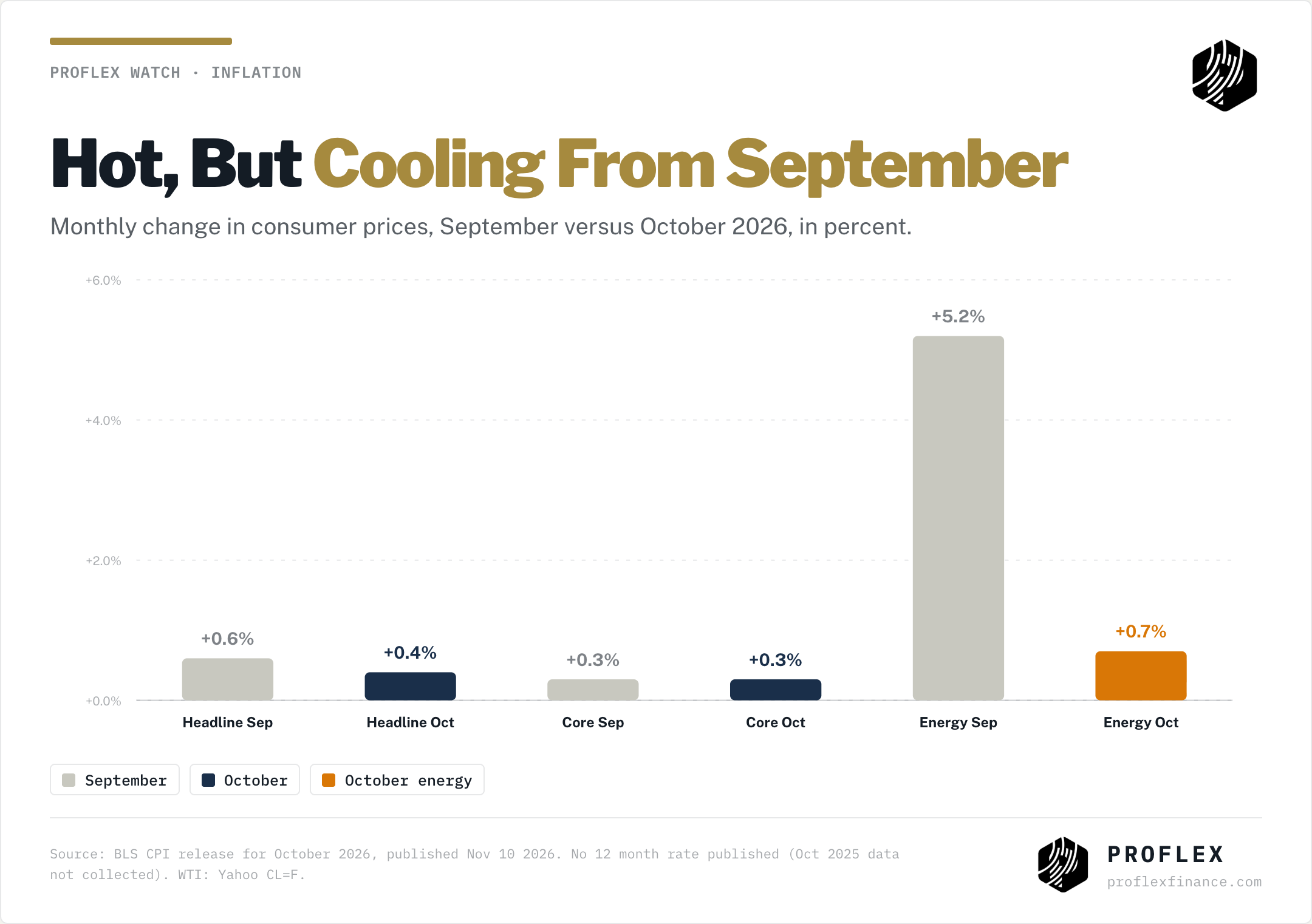
Inflation: Hot, but Cooling From SeptemberThe October CPI report on November 10 was hot. We are not going to pretend otherwise.
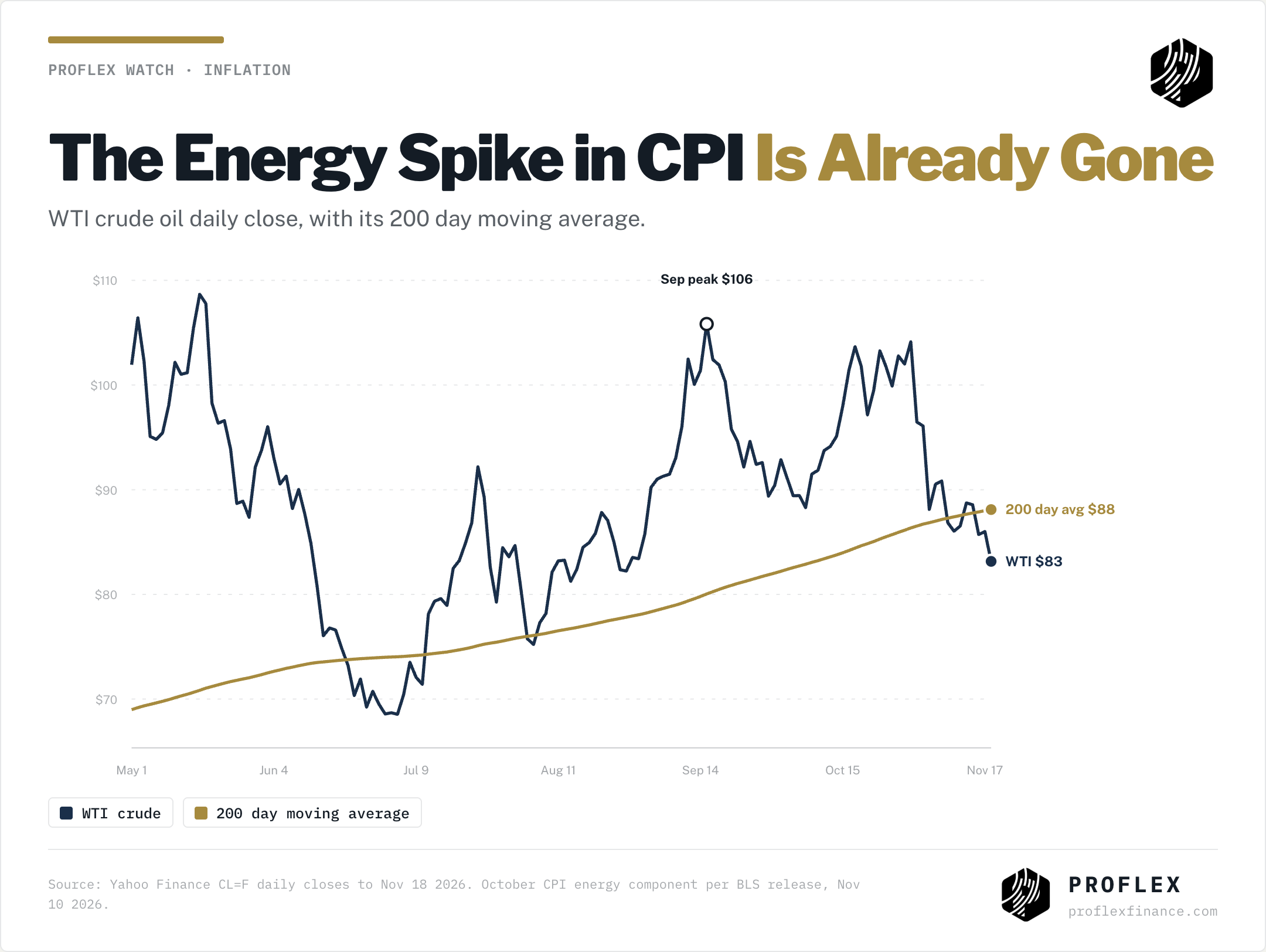
Here is what the headlines missed. September was worse. Headline CPI was 0.6% in September and energy alone was up 5.2% in September. October's 0.7% energy reading is a sharp slowdown. And the oil drop has not reached CPI yet. WTI is down about 21% from its September 15 peak, at about $83, below its 200 day moving average (about $88). That decline will start showing up in the November and December prints. (No 12 month rate was published this time, because government data for October 2025 was never collected during last year's shutdown.)
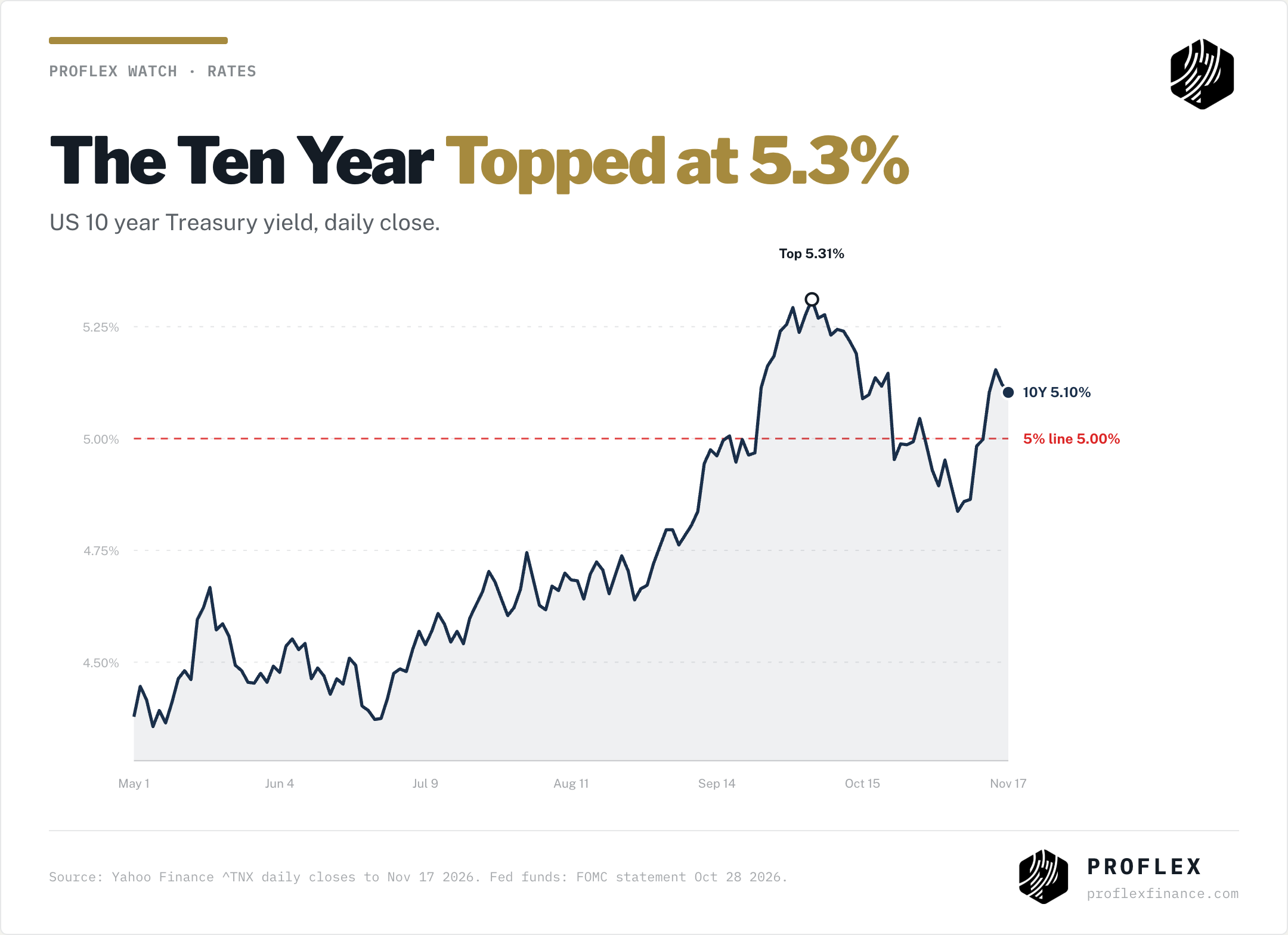
Rates: The Ten Year Topped at 5.3%, Even With a Hike PricedThe ten year Treasury peaked at 5.31% on October 5. It fell as low as 4.84% on November 5, and has bounced to 5.10% on November 12 as hike odds firmed. It is still about 20 basis points under the October peak. The Fed held at 3.75-4.00% on October 28. Futures put the odds of a 25 basis point hike on December 9 at roughly 80%. That sounds bad, but look at what the bond market did with it. The long end fell even as the hike got priced in. The bond market is telling us that one more hike gets inflation under control. It is not pricing a spiral.
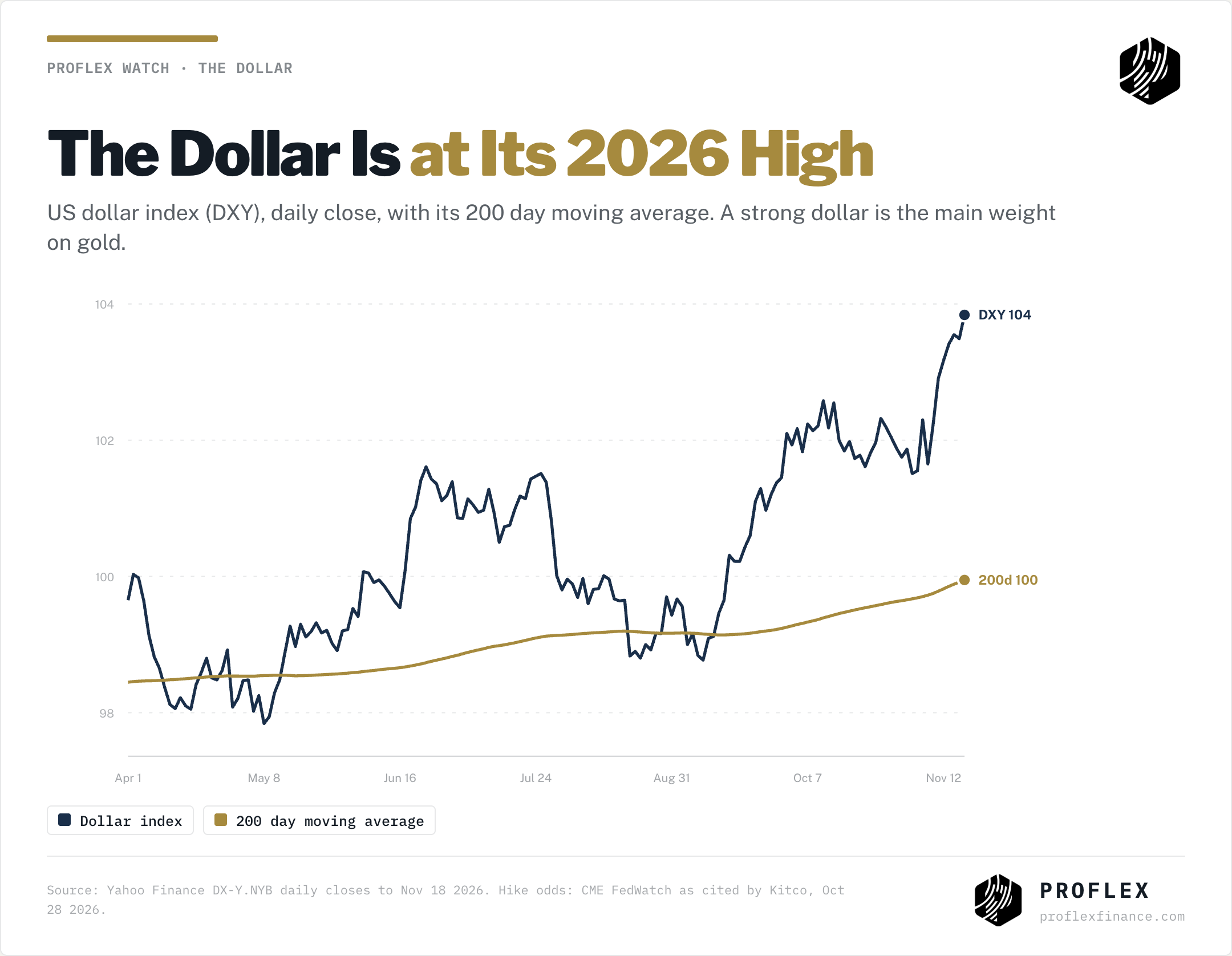
The Dollar: The Headwind for Metals, Not for AIThe dollar index is at 103.8, a new 2026 high and about 3.9% above its 200 day average. A Fed that may hike while others hold keeps the dollar strong. This matters for how we rank our assets. A strong dollar is the biggest weight on gold and silver, because they are priced in dollars and pay no interest. It barely touches Nvidia's earnings, which are being set by data center demand. We cover what that means for metals and Bitcoin below.
Midterms: Washington Changes HandsDemocrats took control of Congress on November 3. The Dow had its best post-midterm Election Day in 44 years the next morning. Markets like gridlock, because gridlock means fewer surprises. The "blue sweep" trade faded quickly after, which also hit names like Tesla. The political headlines that did hurt were specific to AI. Data center backlash in Texas and the Wall Street Journal's report on Megaspeed, Nvidia's largest Southeast Asia buyer, both added to the selling. We cover both in the AI stories below.
⚡ Iran and Oil: The Pressure Is Coming OffFor most of this year the Strait of Hormuz kept oil above $100. In the past two weeks that changed. Brent fell from above $103 to the low $90s in one week, and fell another 5% on November 9 after signals of restraint on Iran. We are not positioned for a full resolution and we are not calling one. But oil does not need a peace deal to stop being a problem. It only needs to stop rising, and right now it is falling. 📅 What Comes Next: Prepare, Don't Predict
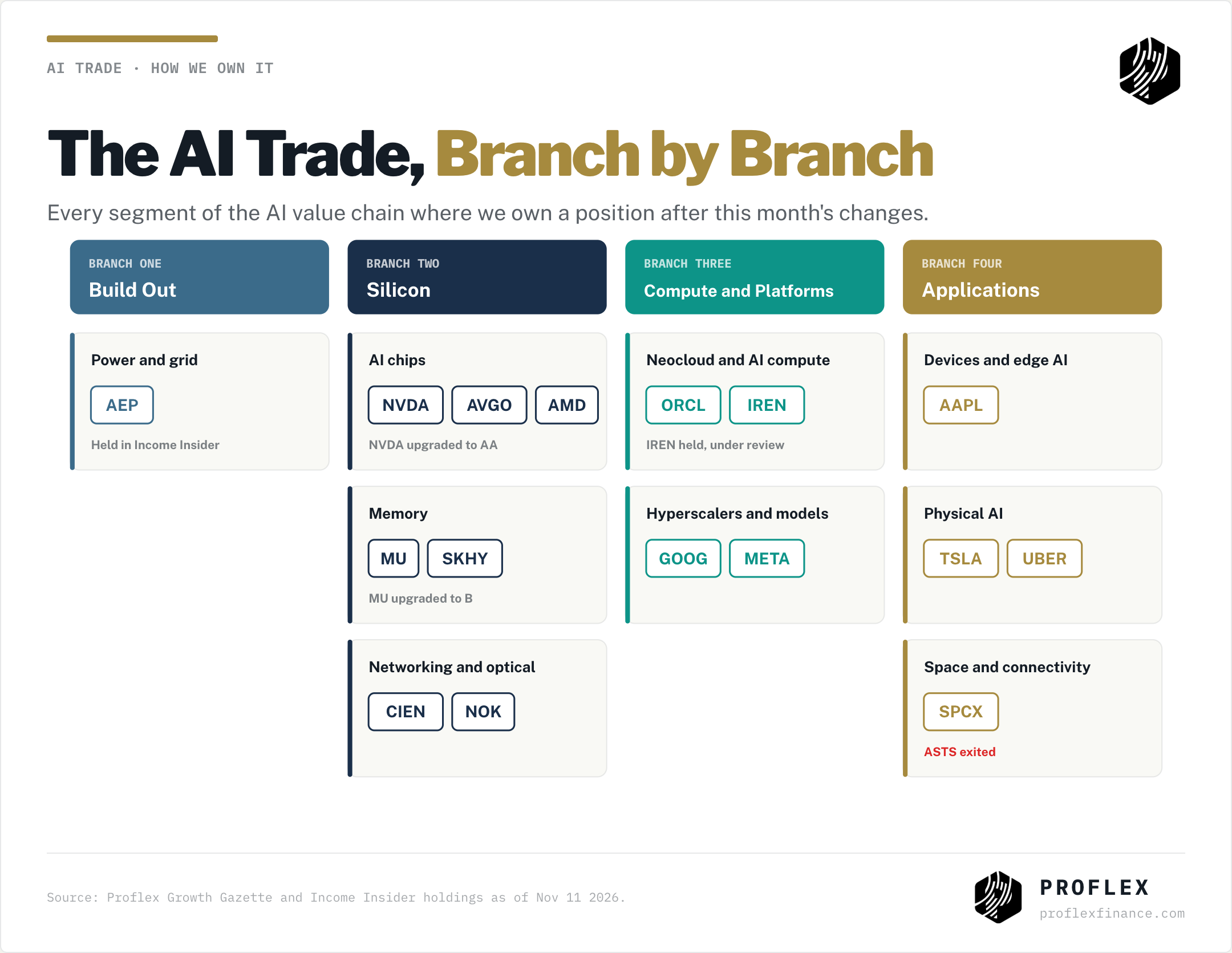
🚀 AI Trade The AI Trade, Branch by BranchLast month we broke the AI trade into four branches, from the ground up. We keep that structure, because this month showed again why it matters. The branches did not fall equally, and they did not fall for the same reasons.
This month we made one cut to the map: ASTS leaves applications. IREN stays in compute, held and under review. We upgraded Nvidia to AA and Micron to B. The full reasoning is below.
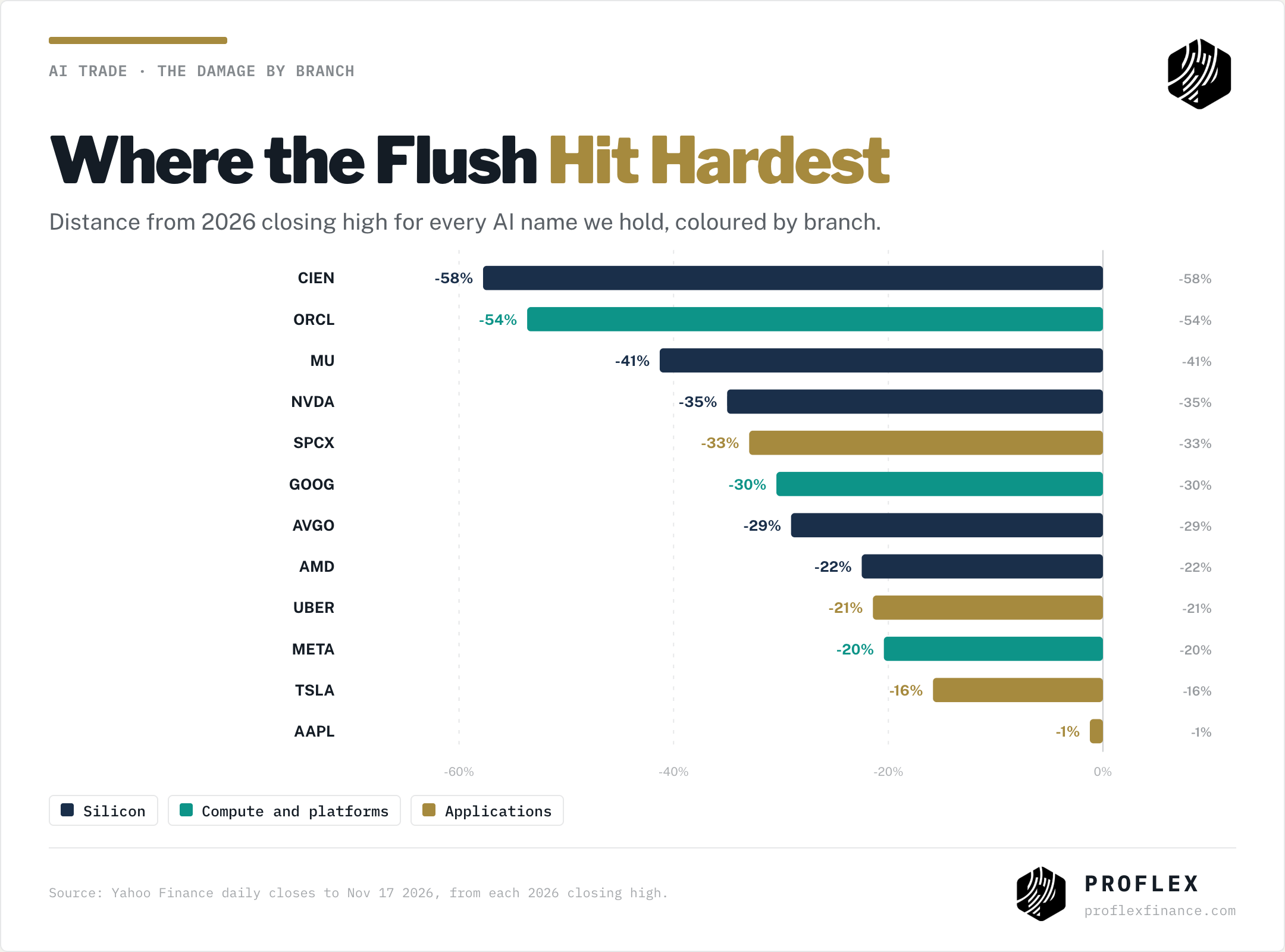
The damage was not evenly spread. The names carrying debt or long-dated promises (Ciena, Oracle) fell the most. The names with cash flow today (Apple, Tesla, Meta) fell the least. Nvidia sits in the middle: down 35% while its earnings estimates went up.
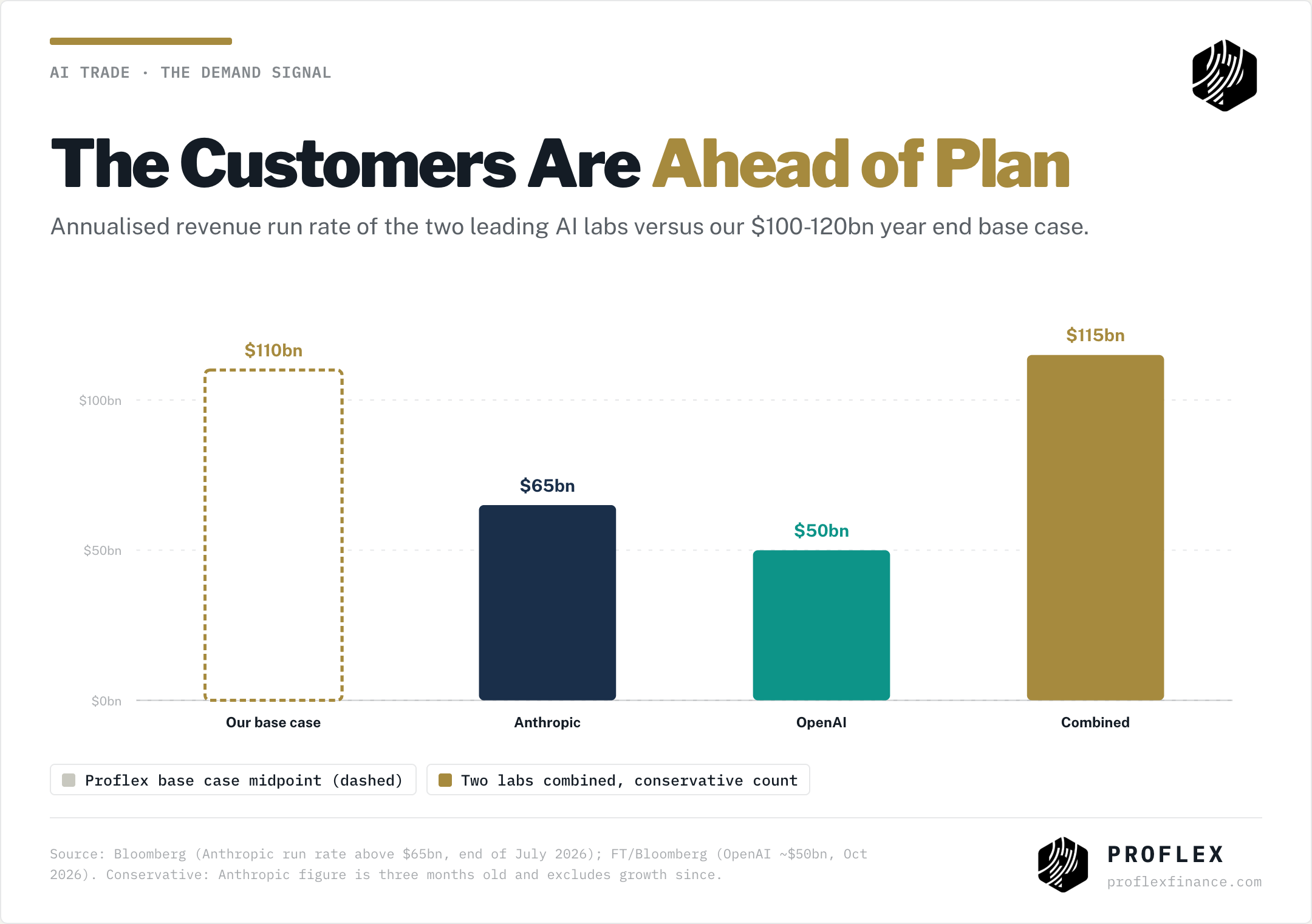
First, the Demand: The Customers Are Ahead of PlanEvery AI chip, every data center and every power contract depends on one thing: people paying for AI. Those numbers keep coming in ahead of us. In our original AI paper we expected $100-120 billion of combined revenue run rate from the leading labs by the end of this year. Anthropic was already above $65 billion at the end of July, per Bloomberg. OpenAI was at about $50 billion in October. Even on a conservative count, using a three month old Anthropic number, the two are above our base case before the year is out. GPU rental rates tell the same story. H100 rental is up about 40% in a year. There is no sign of a demand crack where one would show up first.
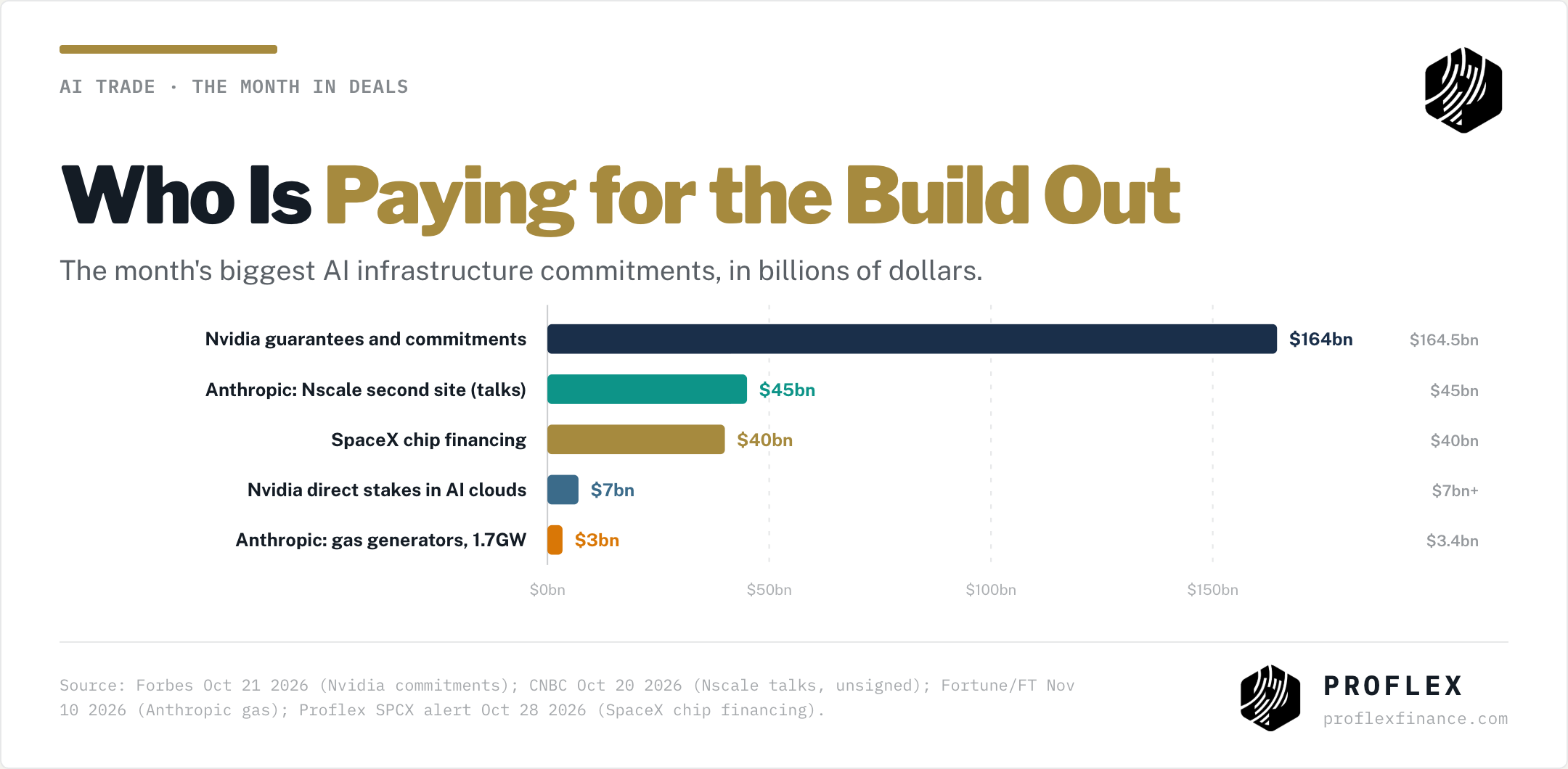
The Month's Biggest AI Stories, and What They Actually MeanSeven stories moved the AI trade in October. Here is each one in plain terms, and where it leaves our book. 1. Nvidia is financing its own customers. Circular, or smart? This is the right worry, and it is the reason the neocloud names fell hardest. Forbes counted up to $164.5 billion of Nvidia guarantees and commitments behind data centers, plus more than $7 billion of direct stakes in AI cloud providers. The biggest piece guarantees lease payments on an Ohio campus being built for OpenAI. Our view: this is Nvidia using its balance sheet, which holds a record buyback and very little debt, to speed up demand that already exists. The risk sits with the borrowers, the neoclouds. That is why Nvidia, the company giving the guarantees, stays our largest position, and our neocloud exposure stays small. 2. Anthropic is building its own power plants That the biggest AI customer in the world cannot get enough compute or power. On November 10, Anthropic committed $3.4 billion to 1.7 gigawatts of gas-fired generation, the largest direct power purchase by an AI company. It is also reported to be negotiating a second, roughly $45 billion lease with Nscale in West Virginia, with Nvidia in talks to provide credit support. Companies don't build their own power plants when demand is slowing. This is the build out branch accelerating while the stocks fell.
3. OpenAI's $50 billion is an accounting gap, not a demand miss No. The gap is accounting. The $70 billion number counted revenue sold through partners, which is how Anthropic reports. The $50 billion number leaves it out. Same business, two methods. OpenAI still expects to reach about $70 billion on its investor basis by year end. The headline triggered the October 8 selloff, but nothing about the underlying demand changed. 4. Megaspeed: a headline, not a diversion The Wall Street Journal reported that US agencies have looked at Megaspeed, a Singapore buyer of Nvidia chips, for over a year. Nvidia's board has opened an independent review. Megaspeed and Nvidia both deny any chip diversion, and no diversion has been established. The market is pricing a governance disaster. We think the chance of a leadership change is very low, and the stock already prices far worse than the facts support. 5. Microsoft leaving an Oracle contract is an upgrade, not a pullback Read the detail. Microsoft is not renewing a contract for servers with older Nvidia chips. It is moving to new hardware, not cutting back. H100 rental prices are up about 40% in a year, which is not what an oversupplied market looks like. It is a real blow to Oracle's growth story, and it is why Oracle stays at Rating C, buy only below $126. 6. Alphabet fell 12% on the one line that didn't matter Search missed slightly and capex went up. At the same time, Google Cloud revenue doubled (+103% to $30.7 billion), operating income more than tripled to $11.1 billion, and the backlog reached $561 billion. The market sold the whole company on one line. We cover why that is an opportunity below. 7. SpaceX quietly became an AI company Its Q3 says so. Revenue rose 161% to $14.58 billion, and the AI segment turned profitable and passed Starlink as the largest revenue line. It has $40 billion of chip financing lined up for capacity already rented to Google and Anthropic. We sold the $140 put on October 28 to add to it, and on November 16 rolled it down to the $135 put (Dec 18) for a credit.
Branch One: The Build OutWe hold AEP in Income Insider, not here. This month gave that position its best support yet: Anthropic buying its own power and Nvidia guaranteeing data center leases both show that power and grid access are now the main limit on AI growth. That is the bottleneck AEP owns. Branch Two: SiliconAI Chips (NVDA, AVGO, AMD): The Toll Booth on Every TokenNvidia and Broadcom are two of our three best names to add, covered in full below. AMD is a hold. It fell 17% on November 5 with the rest of the chips, is still about 22% off its high, and nothing in the business changed. The Meta deal for up to 6 gigawatts of Instinct GPUs is shipping.
Memory (MU, SKHY): UpgradedWe doubled down on Micron on November 5 with a $660 put and upgraded it from C to B (up to 8%). Micron rallied hard, and on November 11 we booked that put for about 90% of the premium. Micron is 41% off its high while memory prices are still rising this quarter, all 2026 HBM supply is sold out under contract, and the buyback is active. SK hynix stays a hold, and we are sizing it carefully. Its US-listed shares trade at a 40 to 50% premium to the shares in Korea, so they can lag even when SK hynix rallies at home. We keep that position smaller and take profits faster. For new memory money, we prefer Micron first, then SanDisk.
Networking and Optical (CIEN, NOK): HoldCiena is the hardest hit name in our book, about 58% off its high. We booked our $430 covered call in October for most of its value, so our effective cost sits well below the market. Nokia is a hold. Neither business has given us a reason to sell. The selling was positioning. Branch Three: Compute and PlatformsNeocloud (ORCL, IREN)Oracle is a buy only below $126, Rating C. The $20 billion raise is done and capped through 2030, but losing the Microsoft contract shows how fragile the neocloud model is. IREN is held, under review, at Rating C (up to 4%). It is priced for failure: sentiment is overly negative while the fundamentals show the story has not gone away. CoreWeave's earnings confirm there is more value in powered infrastructure than the market prices in. IREN is valued at about $9 billion, its power is already secured, and its Microsoft contract and $20.3 billion backlog are real. We will not sell it into the low, and if our view changes we will tell you before we act. Hyperscalers and Models (GOOG, META)Alphabet is one of our three best names to add, covered below. Meta is a buy below $630, Rating B. Better recommendation models lifted ad prices 14%, nearly 10 million advertisers now use its AI ad tools, and revenue grew 26%. The ad business is paying for the $135-145 billion capex bill. Branch Four: Applications
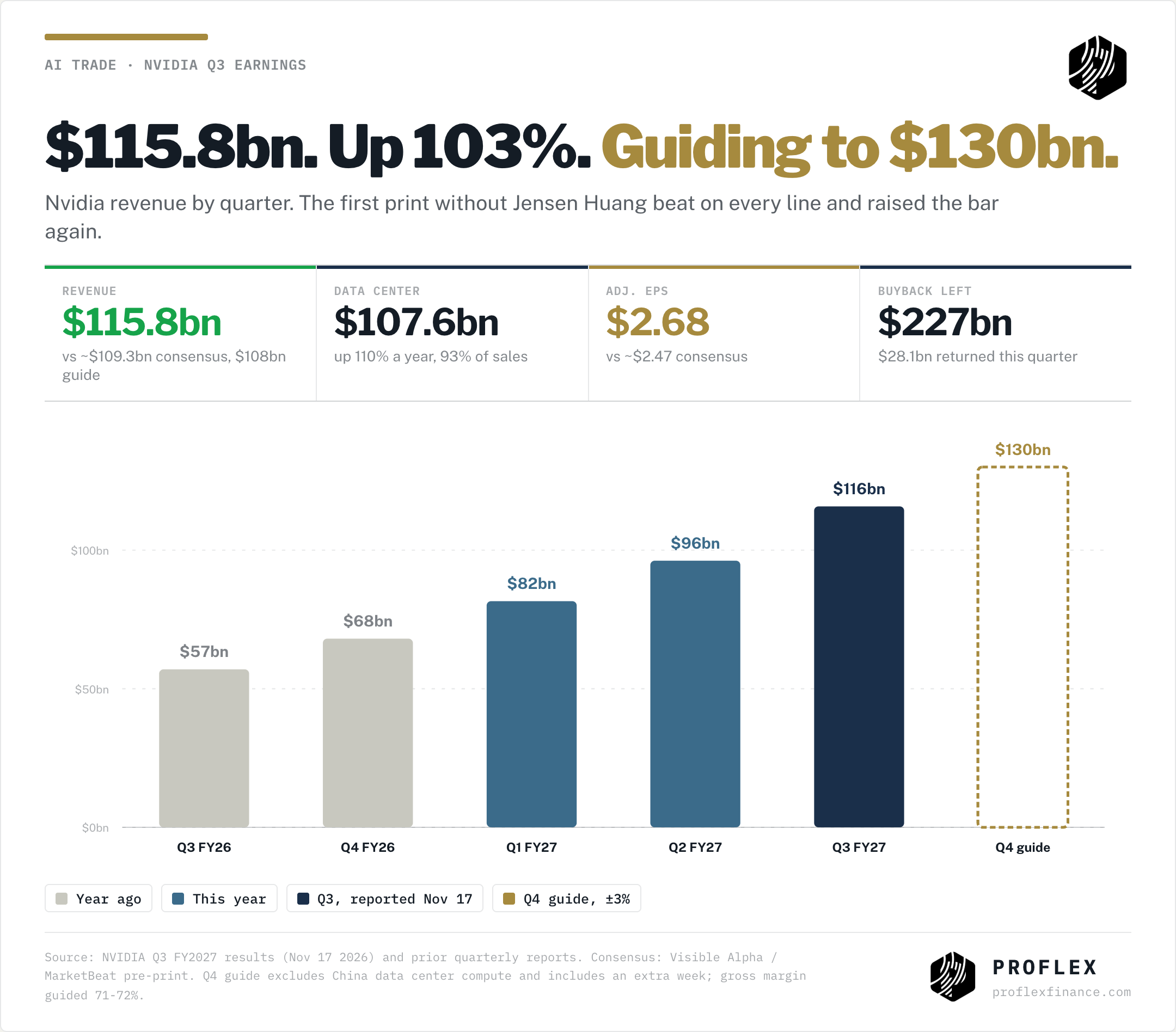
Best Names to Add if You Are Under-Allocated: Nvidia, Broadcom, AlphabetIf you only add three names this month, these are the three. All are profitable, all have contracted demand, and all are trading well below where their fundamentals say they should. Nvidia — Rating AA (up to 32%): Beat, Raised, and Under 10x EarningsEarnings highlight: Q3, reported November 17 The first quarter without Jensen Huang beat on every line that matters, and raised the bar again:
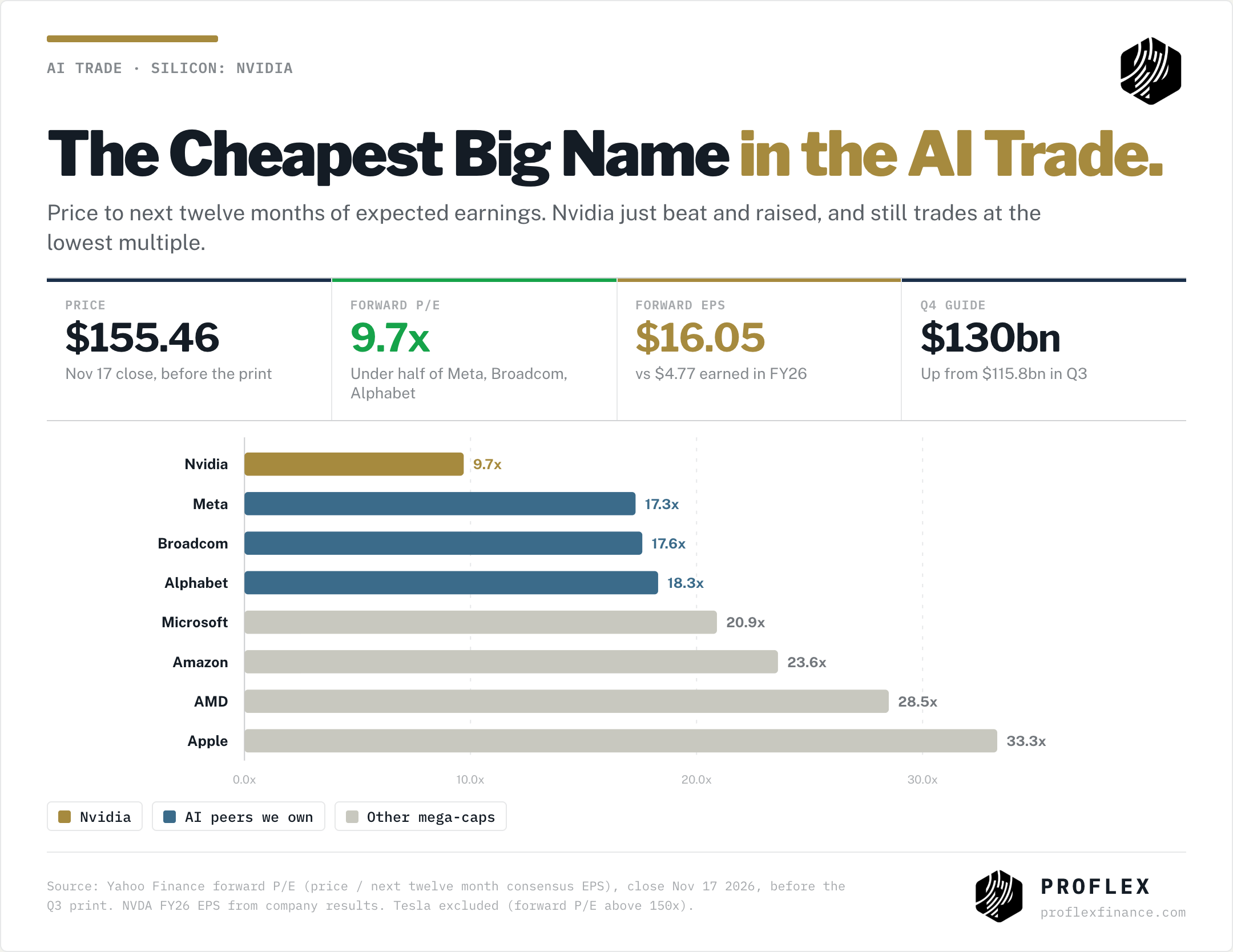
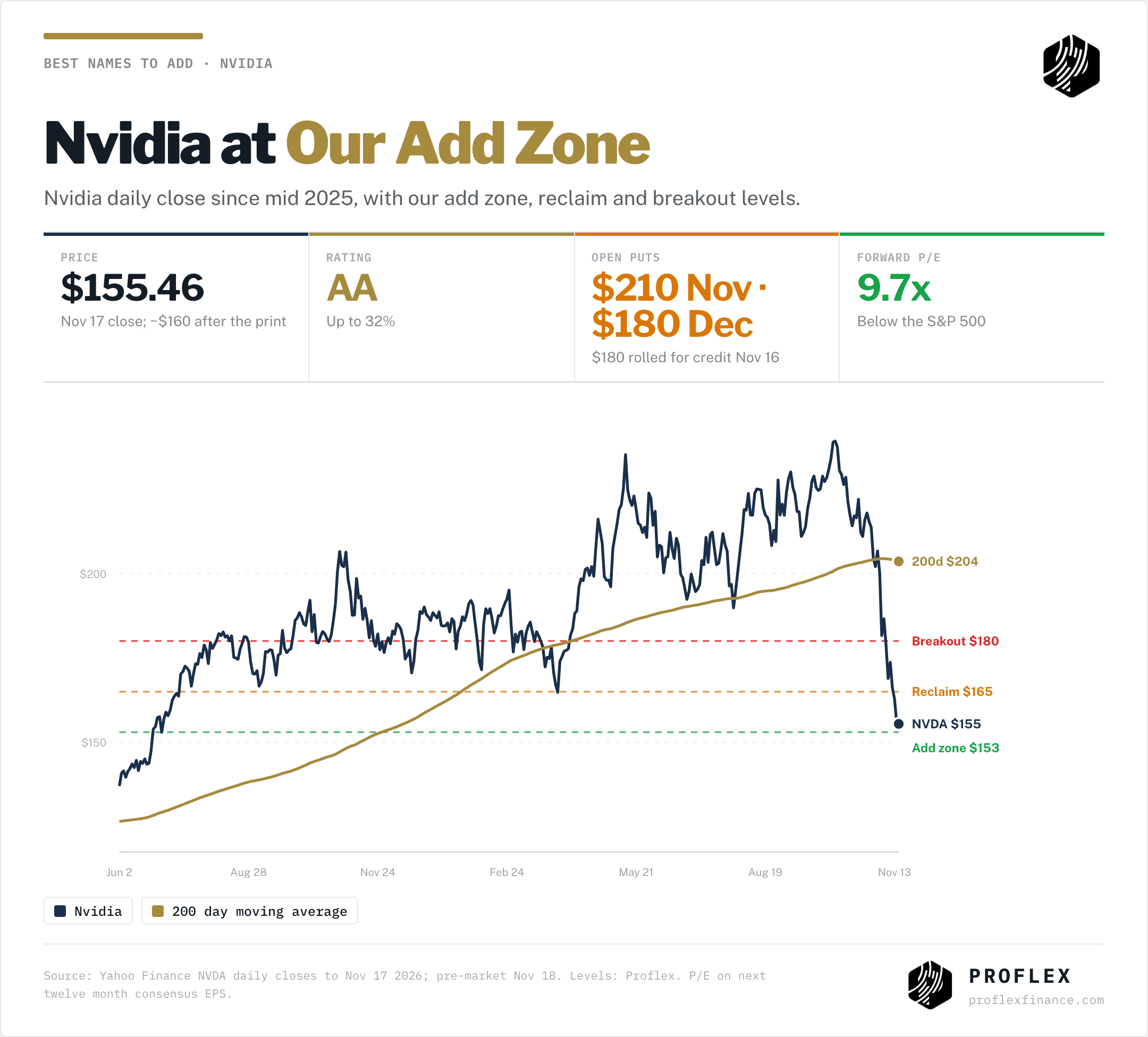
What the numbers tell us. In five quarters, quarterly revenue has gone from $57.0 billion to $115.8 billion, and the guide says $130 billion is next. Data Center alone added $18.6 billion in a single quarter ($89.0 billion to $107.6 billion). What the market did. Nvidia closed at $155.46 on November 17, before the print, its lowest close in a year and below the September 2025 ($167) and March 2026 ($165) lows. It traded near $160 before the open on November 18. At $155.46 Nvidia trades at about 16.6x this year's earnings and 9.7x the next twelve months (consensus EPS of $9.34 and $16.05). That is the lowest multiple of any big name in the AI trade: Meta, Broadcom and Alphabet trade at 17.3x to 18.3x, Microsoft at 20.9x, AMD and Apple above 28x.
Customers keep committing. Meta expanded its multiyear deal for millions of Nvidia GPUs. SpaceX will build compute on Nvidia hardware. Vera Rubin is shipping.
The CEO change. Jensen Huang resigned on November 12 over personal conduct, not the business. CFO Colette Kress, who has run Nvidia's finances through the whole AI build out, is interim CEO, and the board is searching inside and outside the company. We take it seriously: founders matter, and Huang was the face of the company. But the products, the roadmap, the customers and the $108 billion guide are the same as they were on November 11. Vera Rubin is designed and shipping. On November 17 Kress presented her first quarter as interim CEO, said the roadmap is on track, and confirmed the board will not reinstate Huang. The numbers answered the question we asked on November 12: the business did not miss a beat. Our positions: Core shares held. $210 put (Nov 20), below the strike: we take shares or roll for credit into the AA allocation. On November 16 we rolled the $180 put to December 18 for a $2.50 credit, lifting total premium to $11.25 and lowering breakeven to about $168.75. New traders can still enter through the December $180 put (see Active Options below).
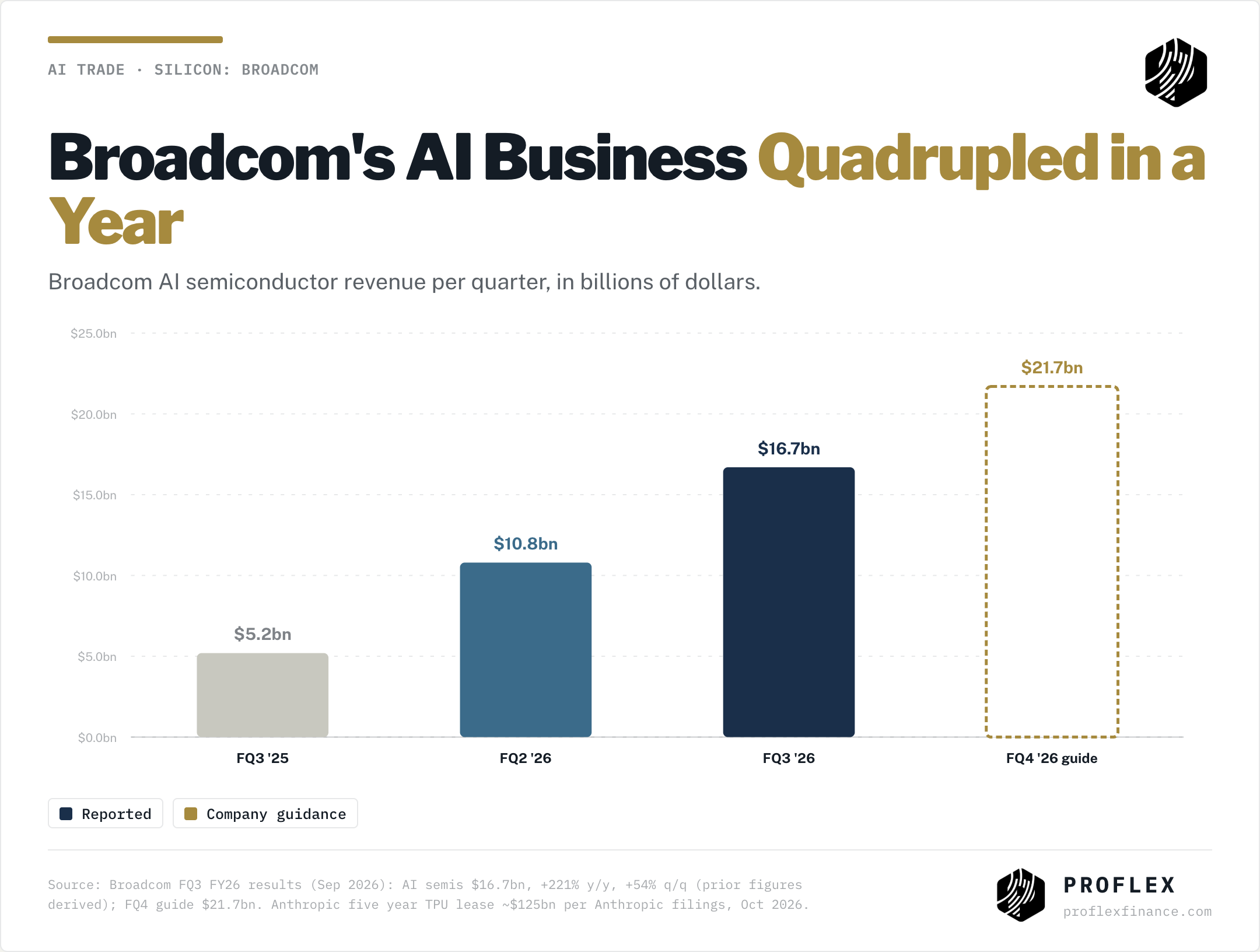
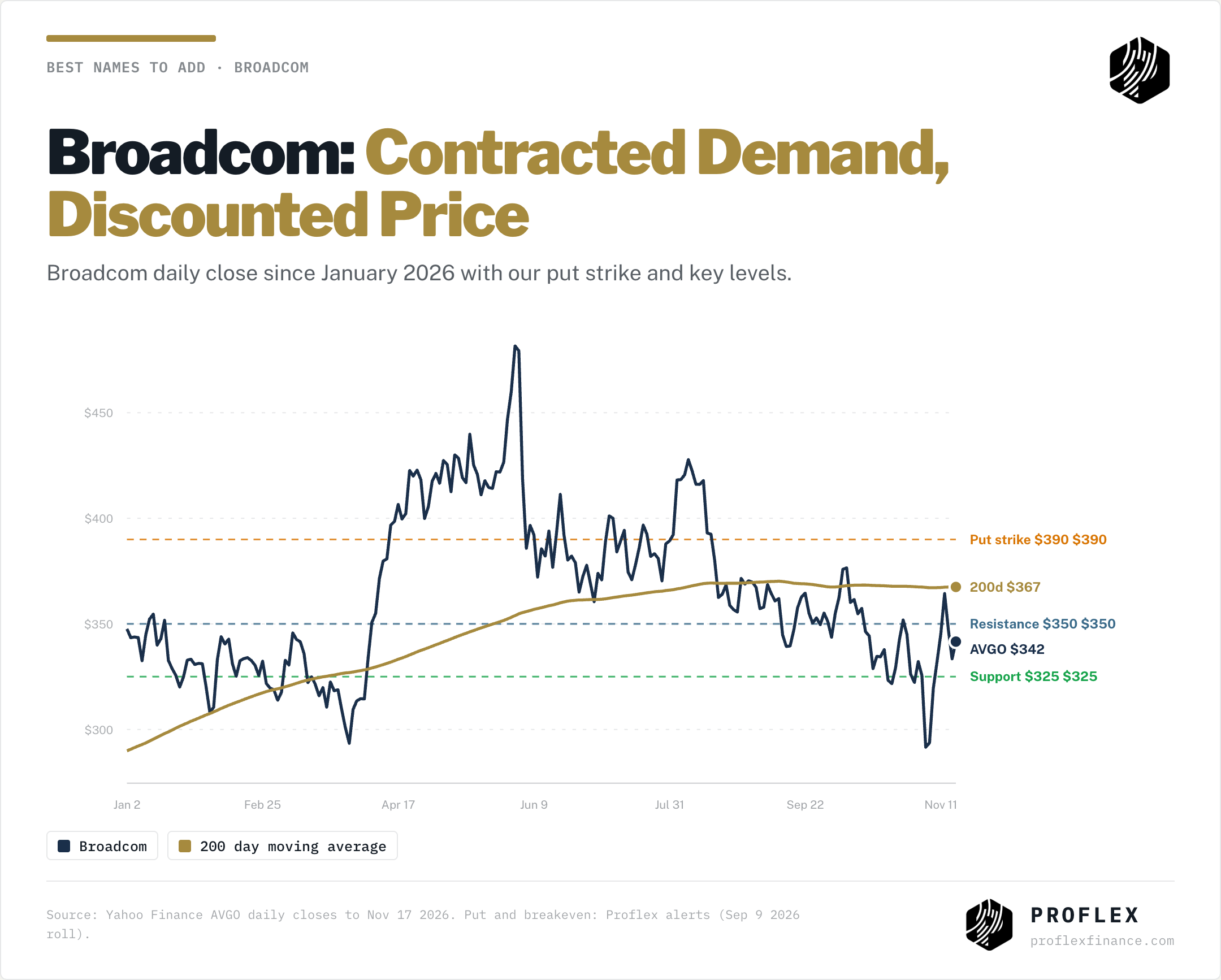
Broadcom — Rating B (up to 8%): The Most De-Risked Name in SiliconBroadcom's AI semiconductor revenue was $16.7 billion last quarter, up 221% a year, and it guided to $21.7 billion for this quarter. It has secured supply for about $115 billion of AI chips in fiscal 2027. The biggest change this year is Anthropic. Anthropic's filings describe a roughly $125 billion five year TPU lease tied to Broadcom, non-cancellable except on default. That is contracted demand, not a forecast. And Google says TPU system sales will ramp meaningfully in 2027. Broadcom designs those TPUs.
Our position: $390 put, November 20, rolled twice for credit to a net breakeven near $359.50. We plan to take the shares.
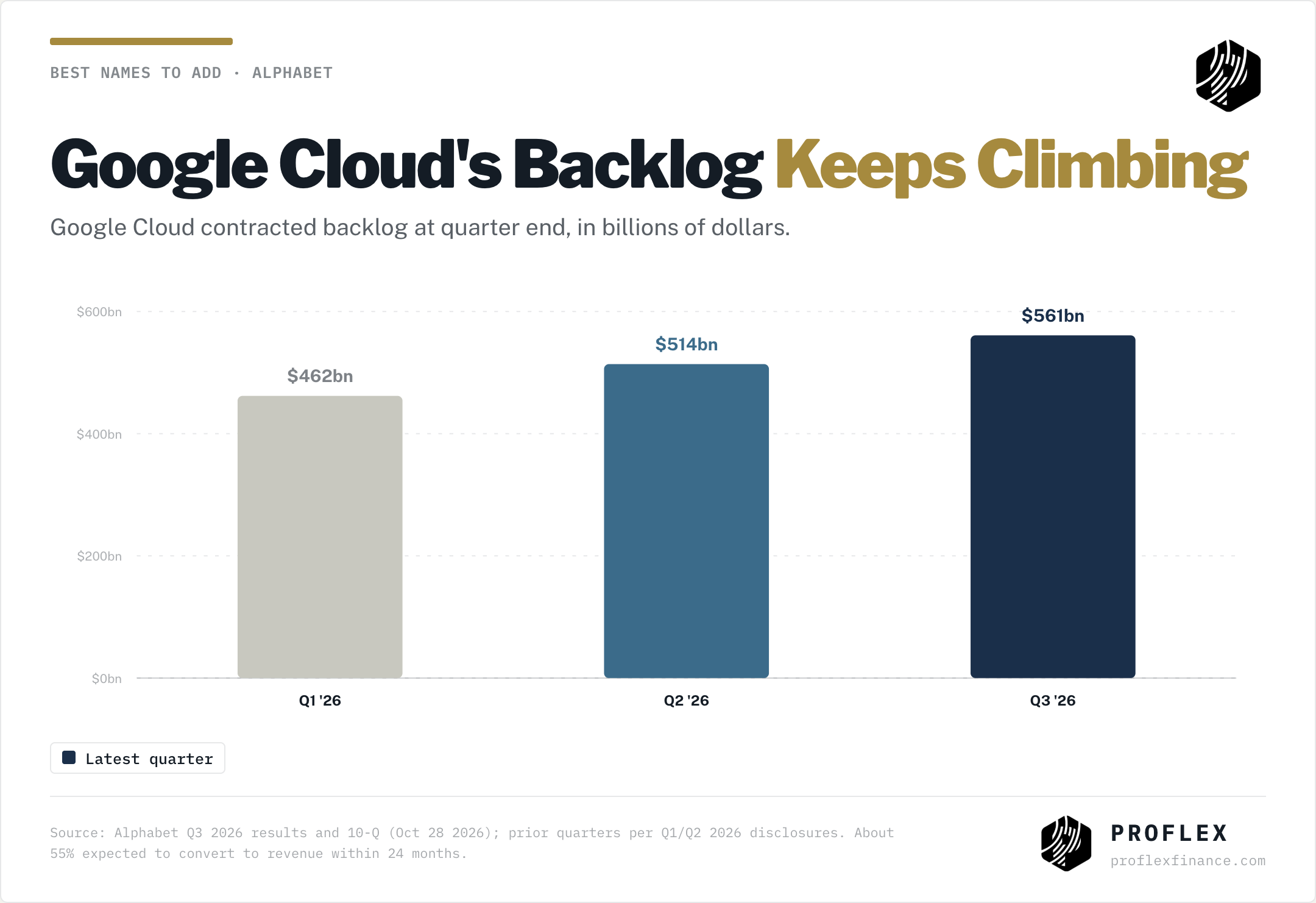
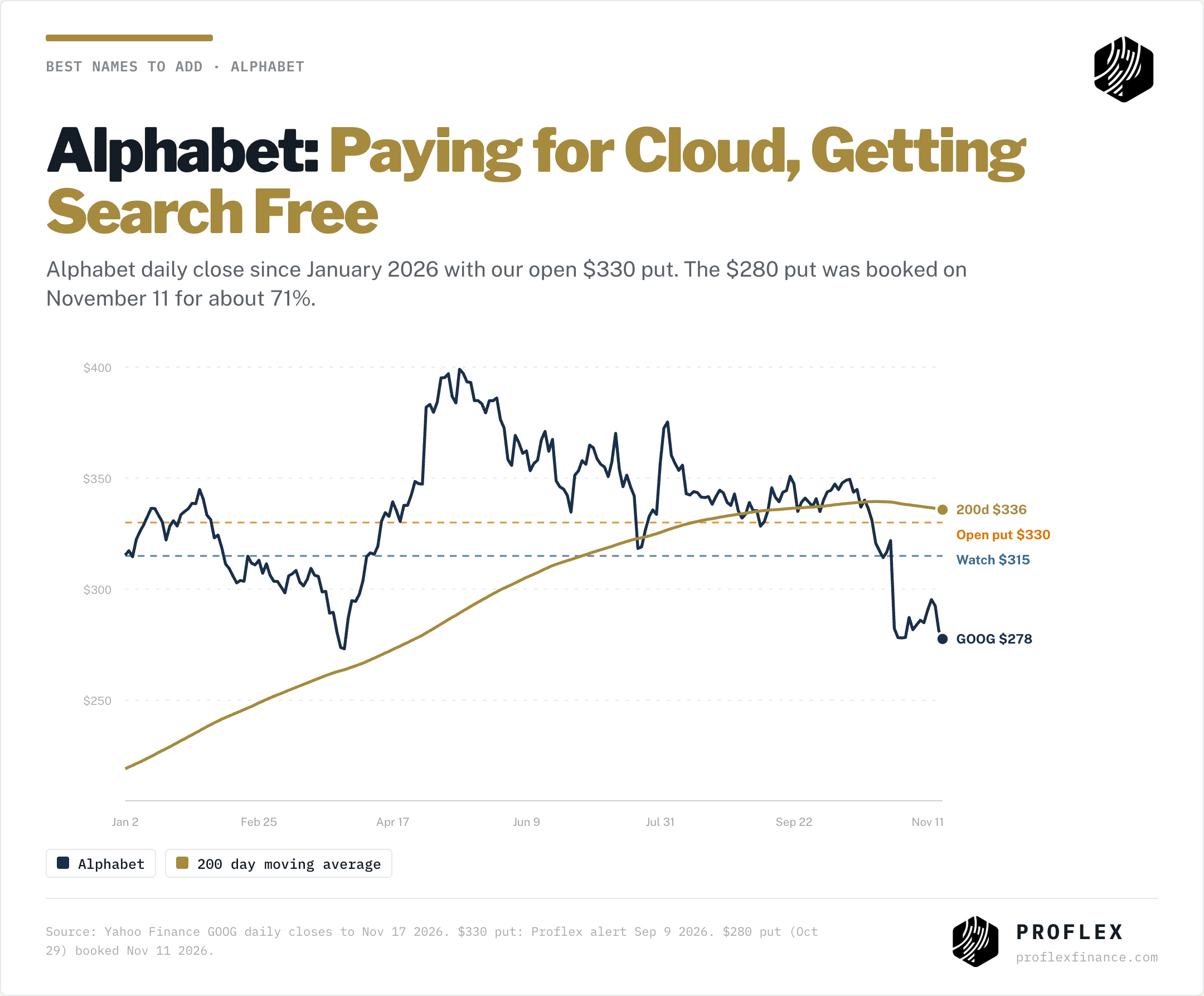
Alphabet — Rating B (up to 8%): Paying for Cloud, Getting Search FreeAlphabet is 30% off its high, the largest discount in its group, right after the best Cloud quarter in its history:
At $285 the market is paying for Cloud alone and pricing Search, YouTube, Waymo and Gemini at close to zero.
Our positions: $330 put (Nov 20), which we plan to take into allocation. The $280 put we issued for under-allocated members on October 29 was booked on November 11 for about 71% of the premium. The level we are watching: $315. If Alphabet climbs back to $315 and holds, we would read that as a sign the wider market is returning to normal, with room toward about $340. Until then, we would rather build the position slowly through puts than chase it.
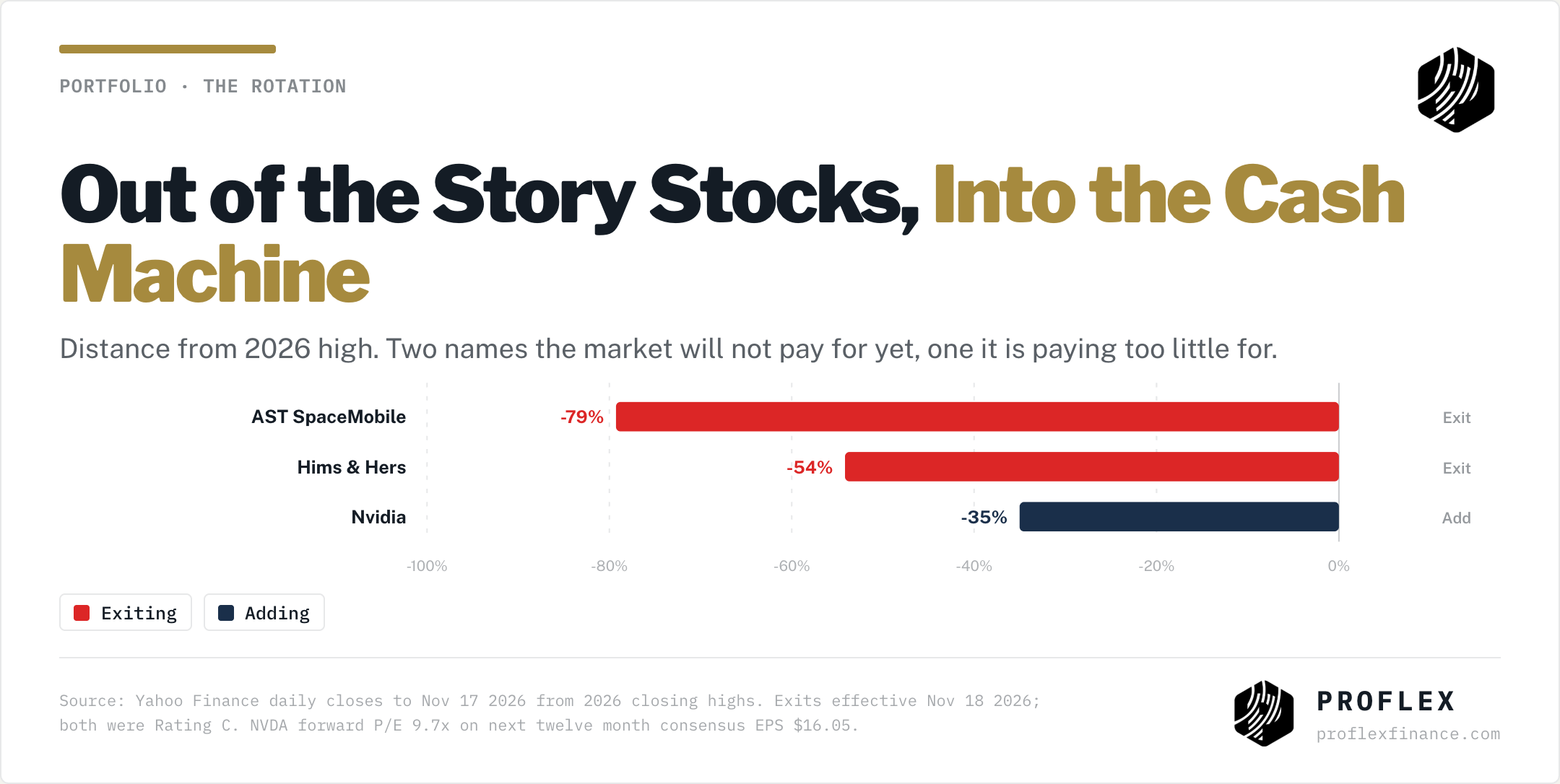
The Rotation: Exiting HIMS and ASTS, Adding to NvidiaThis is the biggest change to the book this month, so here is the reasoning in full. Both were Rating C (up to 4%), and we are exiting both on November 18. The allocation moves into Nvidia. Both are stories about the future. HIMS is a margin turnaround. ASTS is a satellite network that is not built yet. This market is not paying for the future right now. It is paying for cash flow today. In that kind of market, story stocks get hit harder on the way down and recover last. And both have disappointed:
Nvidia, by contrast, is profitable, buying back stock, trading under 10x forward earnings after beating and raising on November 17, and sitting at our add zone.
Portfolio components — AI trade:
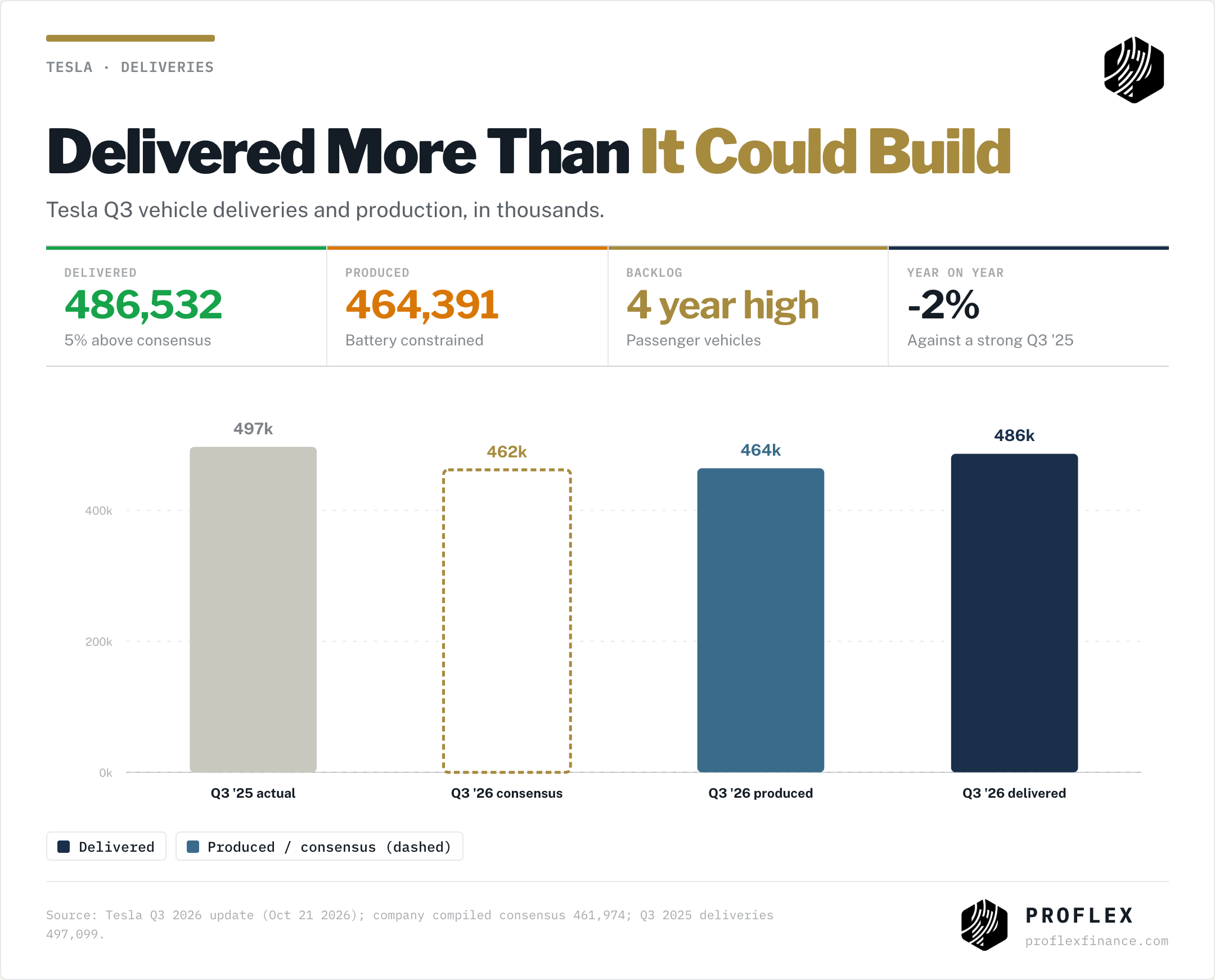
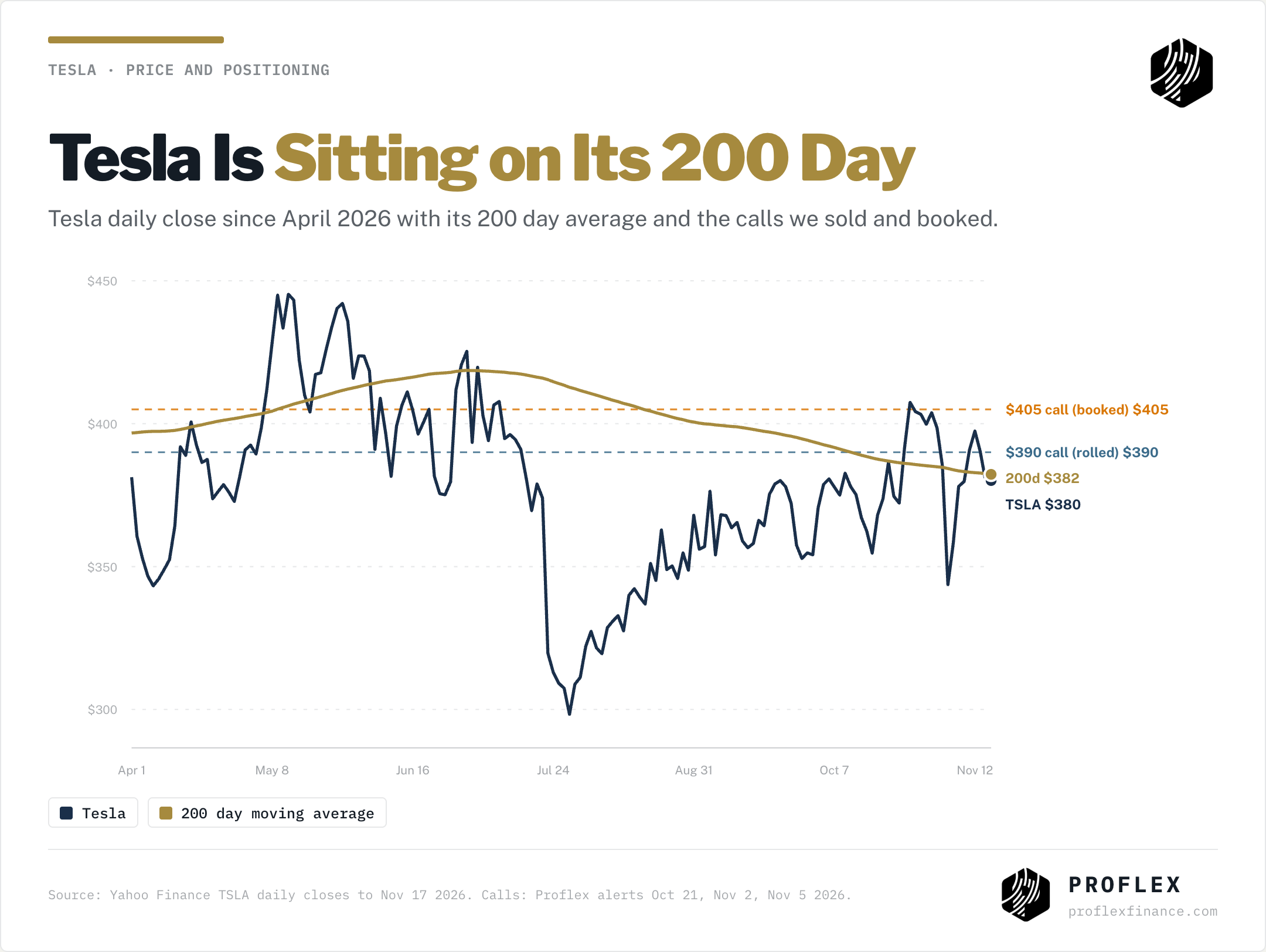
Active Options Trade UpdatesNVDA – Roll Put (November 16, 2026) Trade Action: Bought to Close NVDA $180 Put (Nov 20 expiry) / Sold to Open NVDA $180 Put (Dec 18 expiry) for $2.50 net credit or more SPCX – Roll Put (November 16, 2026) Trade Action: Bought to Close SPCX $140 Put (Nov 20 expiry) / Sold to Open SPCX $135 Put (Dec 18 expiry) for $1.50 net credit or more MU – Roll Put (October 22, 2026) Trade Action: Bought to Close MU $900 Put (Nov 20 expiry) / Sold to Open MU $870 Put (Dec 18 expiry) for $1.35 net debit or less NVDA – Short Put (October 22, 2026) Trade Action: Sold to Open NVDA $210 Put (Nov 20 expiry) for $8.50 or more AVGO – Roll Put (September 9, 2026) Trade Action: Sold to Open AVGO $390 Put (Nov 20 expiry) GOOG – Roll Put (September 9, 2026) Trade Action: Sold to Open GOOG $330 Put (Nov 20 expiry) Previous Options Trade UpdatesNVDA – Short Put (November 5, 2026) Sold to Open NVDA $180 Put (Nov 20 expiry) for $8.75 or more. Rolled to December on November 16 SPCX – Short Put (October 28, 2026) Sold to Open SPCX $140 Put (Nov 20 expiry) for $5.45 or more. Rolled to the $135 Put (Dec 18) on November 16 GOOG – Book Profit on Short Put (November 11, 2026) Bought to Close GOOG $280 Put (Nov 20 expiry) for $1.92 or less MU – Book Profit on Short Put (November 11, 2026) Bought to Close MU $660 Put (Nov 20 expiry) for $3.74 or less MU – Short Put (November 5, 2026) Sold to Open MU $660 Put (Nov 20 expiry) for $38.00 or more GOOG – Short Put (October 29, 2026) Sold to Open GOOG $280 Put (Nov 20 expiry) for $6.70 or more AAPL – Book Profit on Covered Call (November 3, 2026) Bought to Close AAPL $350 Call (Nov 20 expiry) for $1.16 or less AMZN – Book Profit on Short Put (November 2, 2026) Bought to Close AMZN $235 Put (Nov 20 expiry) for $1.85 or less AMZN – Short Put (October 30, 2026) Sold to Open AMZN $235 Put (Nov 20 expiry) for $6.00 or more META – Book Profit on Covered Call (October 22, 2026) Bought to Close META $720 Call (Nov 20 expiry) for $7.85 or less META – Covered Call (October 21, 2026) Sold to Open META $720 Call (Nov 20 expiry) for $32.10 or more MU – Roll Put (October 16, 2026) Bought to Close MU $930 Put (Oct 30 expiry) / Sold to Open MU $900 Put (Nov 20 expiry) for $1.00 net debit or less AAPL – Covered Call (October 14, 2026) Sold to Open AAPL $350 Call (Nov 20 expiry) for $9.43 or more CIEN – Book Profit on Covered Call (October 14, 2026) Bought to Close CIEN $430 Call for $11.07 or less MU – Short Put (October 13, 2026) Sold to Open MU $930 Put (Oct 30 expiry) for $33.00 or more NVDA – Book Profit on Covered Call (October 12, 2026) Bought to Close NVDA $240 Call (Nov 06 expiry) for $2.51 or less Tesla Rating A (up to 16%): The Car Is the Delivery Vehicle. Software Is the Product.Tesla is about $380, 16% below its high and sitting right on its 200 day average near $382. It held up better than almost anything else in our AI book through the flush. Here is what is happening under the surface. 1. Deliveries: Tesla sold more cars than it could build.
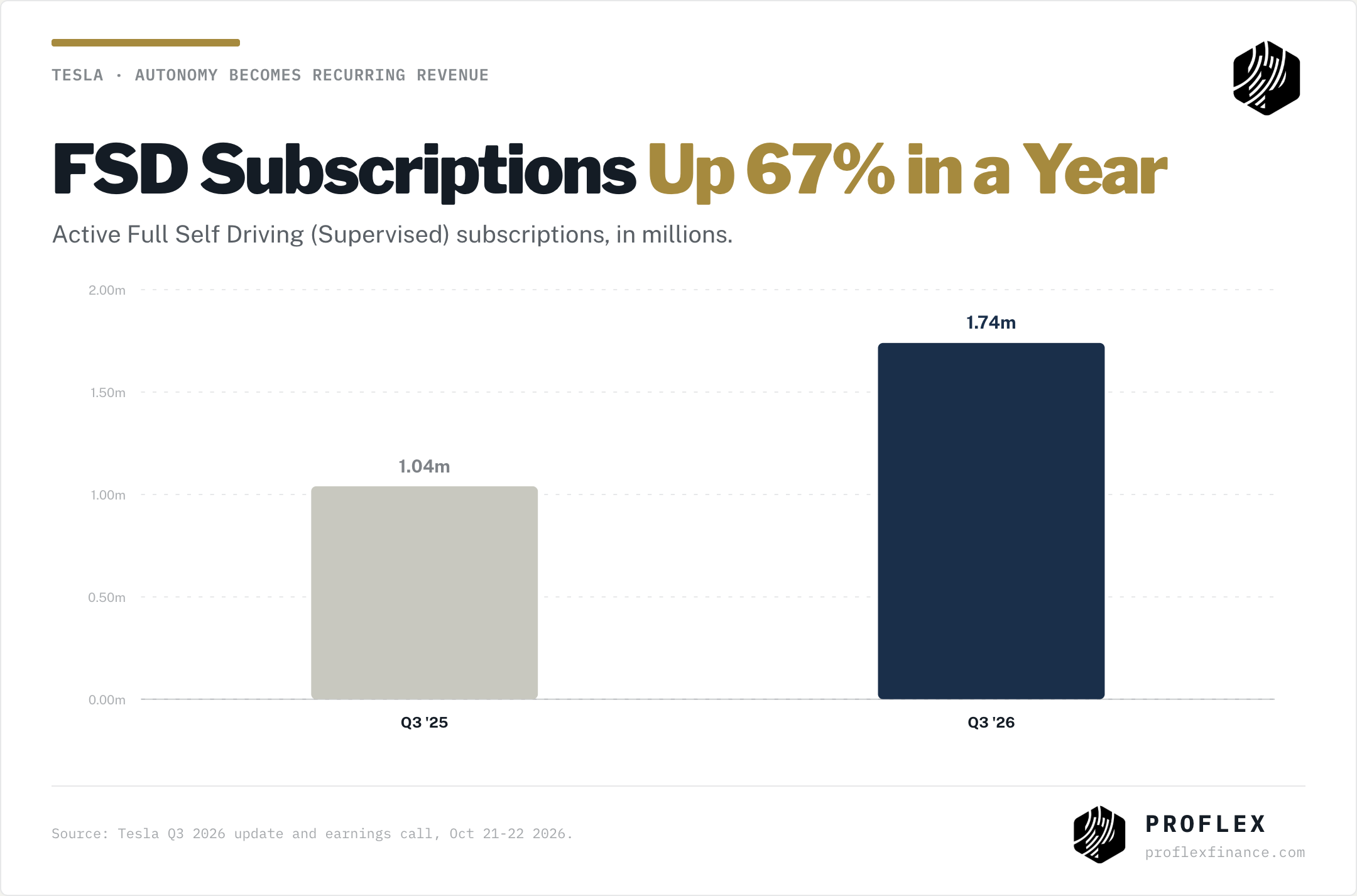
2. FSD: autonomy is becoming recurring revenue. This is the most important number in the report, and few people talked about it.
3. Robotaxi: the Cybercab is on the road.
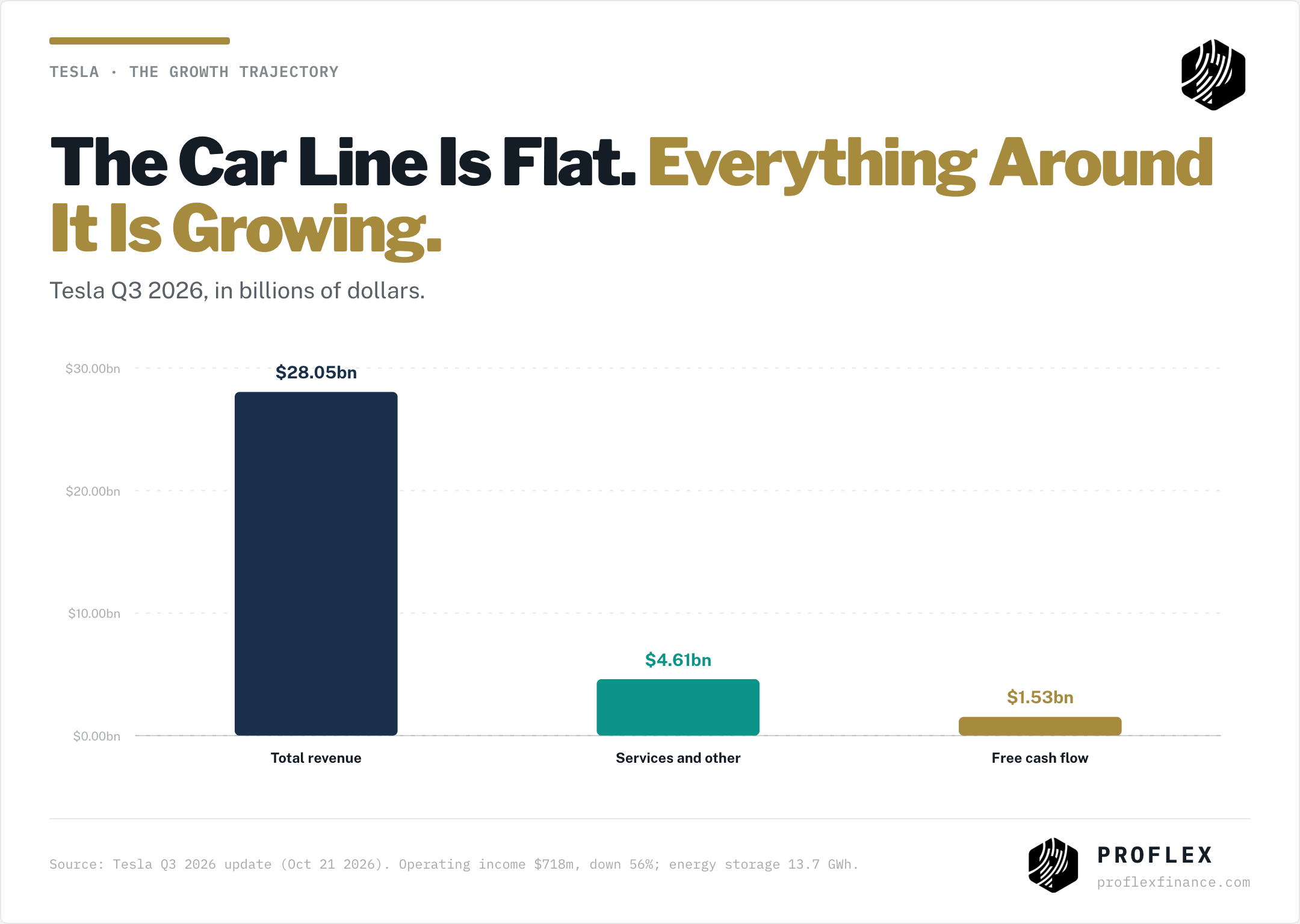
4. The growth trajectory: where the money is shifting.
5. Our positioning this month. We sold a $390 covered call into the pre-earnings run on October 21 for $18.73. We rolled it to $405 on November 2, then booked it on November 5 for $5.60, keeping $12.03 per share. We now hold Tesla unhedged into the robotaxi expansion.
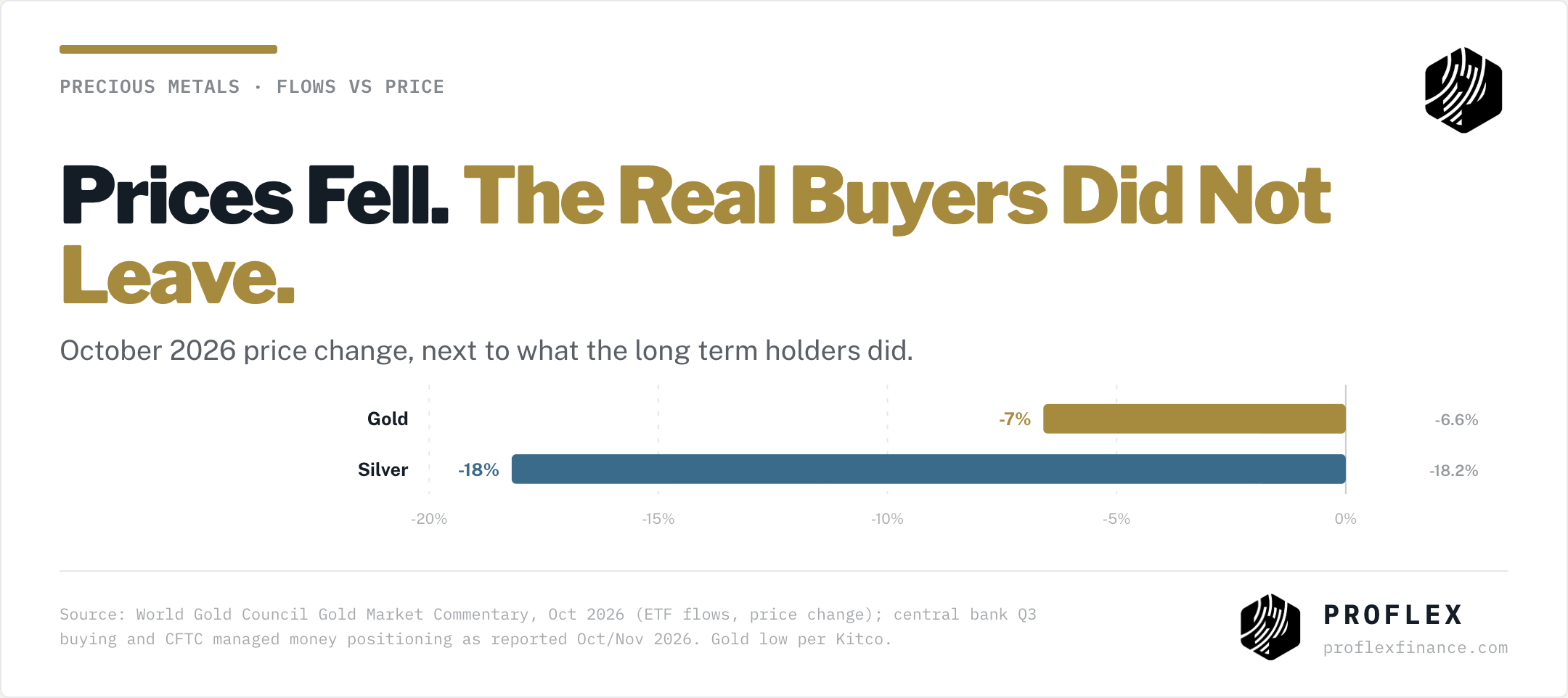
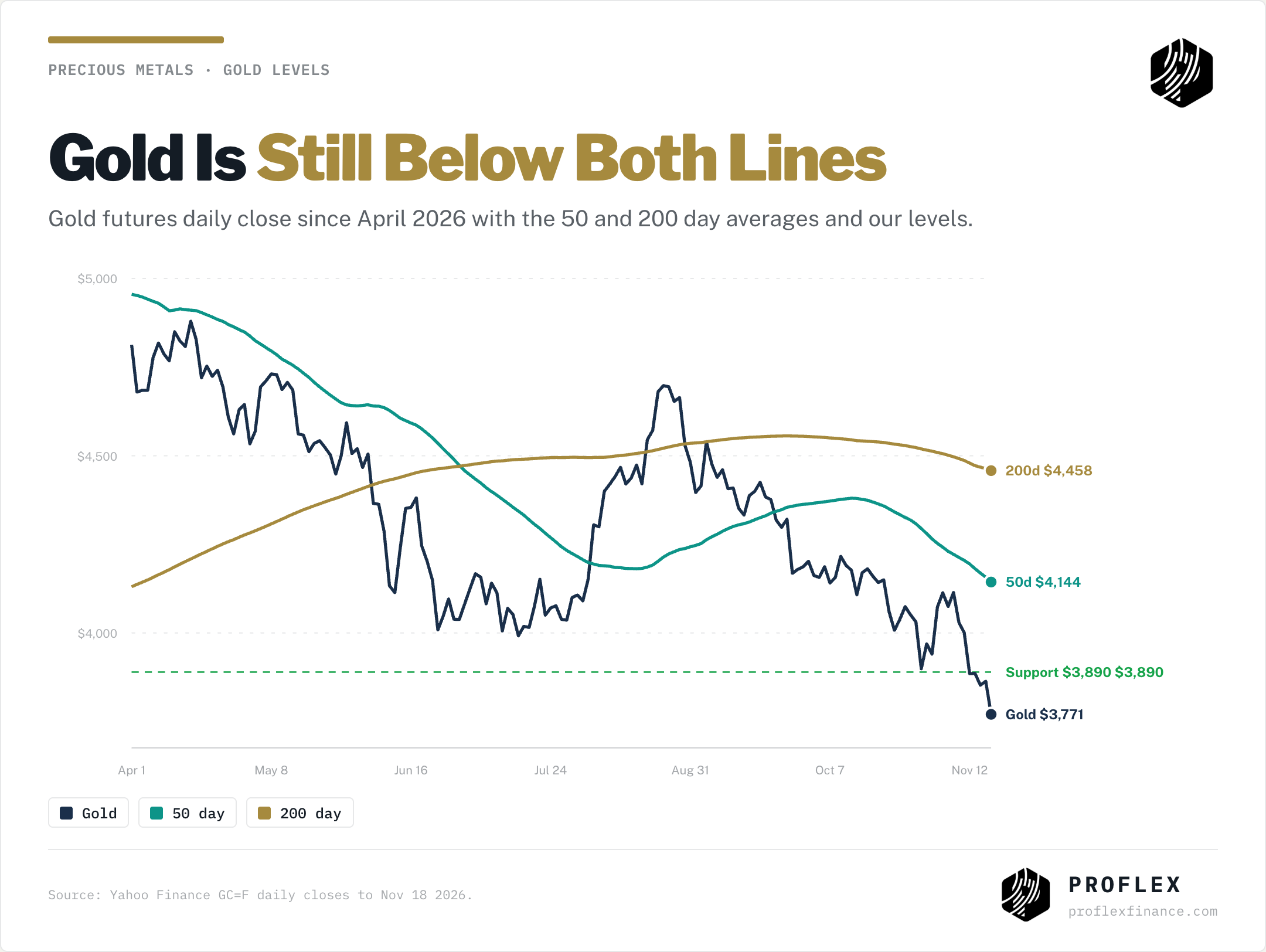
Options PositionsThere is no open Growth Gazette options position on TSLA. Previous Options Trade UpdatesTSLA – Book Profit on Covered Call (November 5, 2026) Bought to Close TSLA $405 Call (Dec 18 expiry) for $5.60 or less TSLA – Roll Call (November 2, 2026) Bought to Close TSLA $390 Covered Call (Nov 20 expiry) / Sold to Open TSLA $405 Covered Call (Dec 18 expiry) for $1.10 net debit or less TSLA – Covered Call (October 21, 2026) Sold to Open TSLA $390 Covered Call (Nov 20 expiry) for $18.73 or more Precious Metals Portfolio Updates The Price Fell. The Real Buyers Didn't Leave. The Trend Hasn't Turned Yet.October was the worst month for the metals this year. Gold fell about 6.6% and silver about 18.2%. Gold broke below $4,000 on October 30, touching $3,892 intraday. It bounced, then slipped back: by November 18 gold is near $3,770, below that low, and silver is near $46. Why they fell is the same macro story as everything else:
Here is the sign this was positioning and not a change in the long term case. Gold fell even as the ten year yield dropped from above 5.3% to below 5%. In a normal market, falling yields lift gold. When the link breaks like that, forced selling is usually the reason. The long term buyers did not leave:
Gold Price Action Analysis
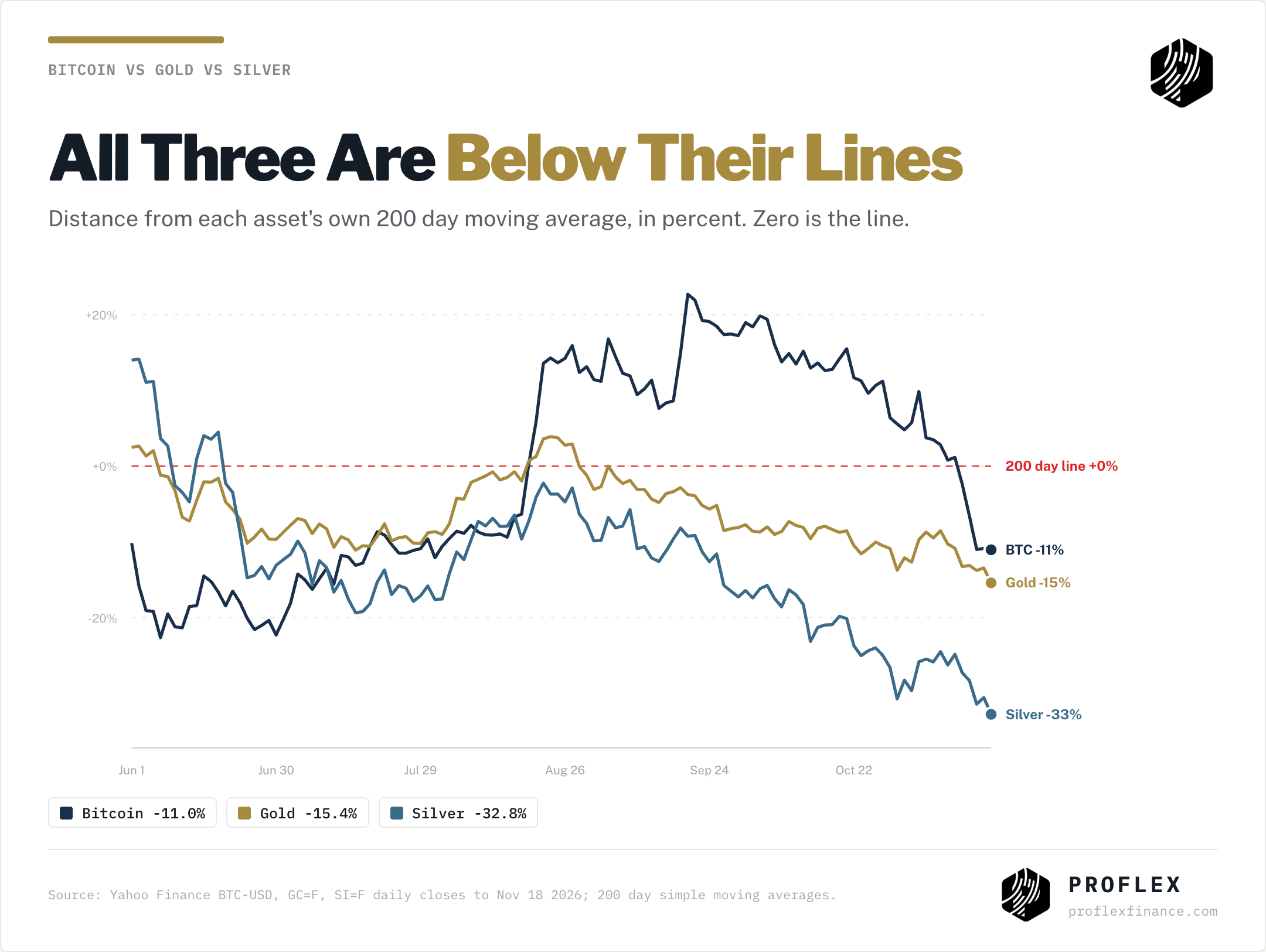
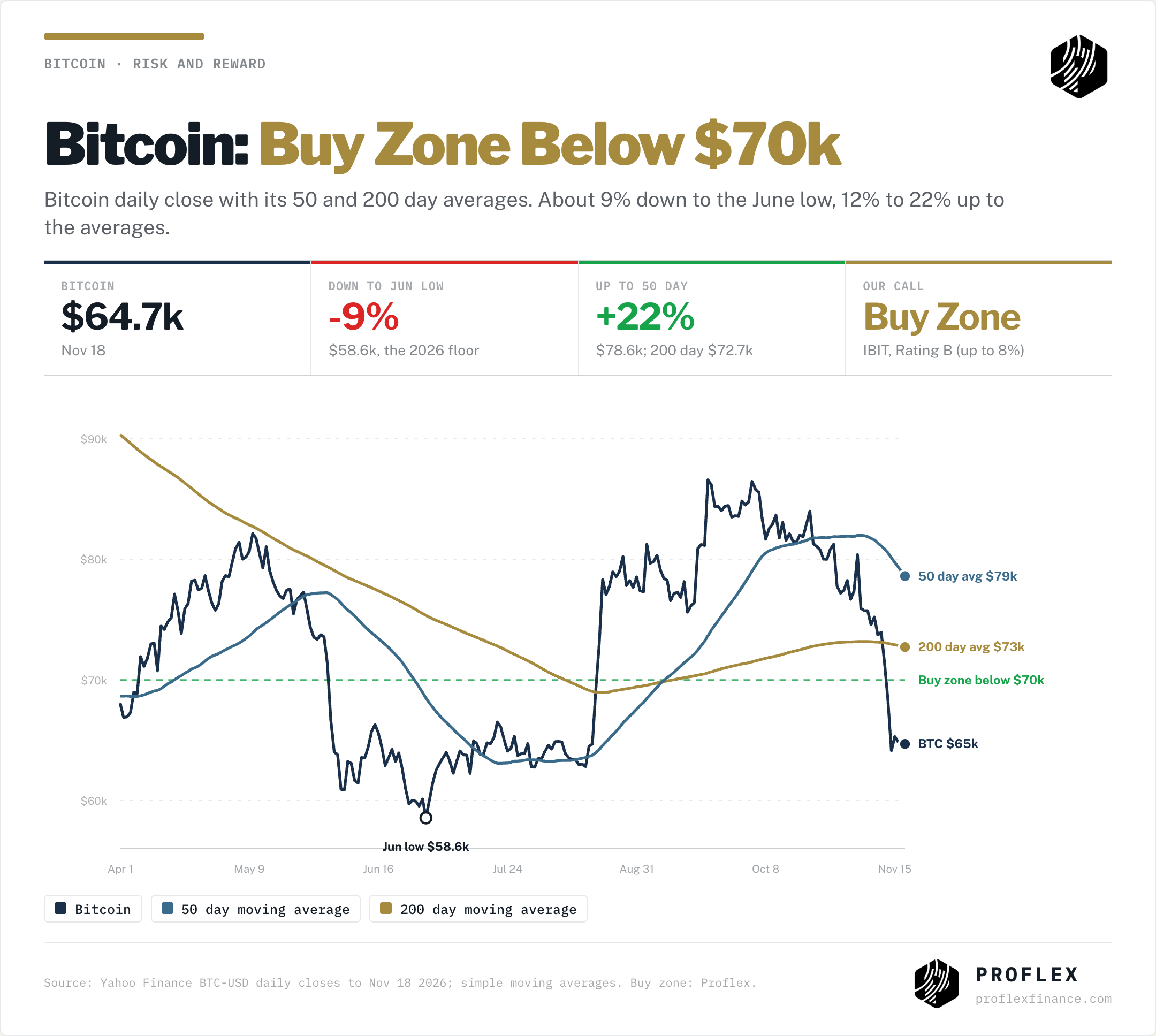
Active Options Trade UpdatesGDX – Roll Put (October 12, 2026) Trade Action: Bought to Close GDX $95 Put (Oct 16 expiry) / Sold to Open GDX $93 Put (Nov 20 expiry) for $0.20 net credit or more Health and Wellness HIMS: ExitingAs covered in the AI section, we are exiting HIMS (Rating C, up to 4%) on November 18. The Q3 margin collapse and guidance cut show the turnaround will take longer than we hoped, and the market is not paying for it today. The allocation moves into Nvidia. Options PositionsThere is no open Growth Gazette options position on HIMS. Bitcoin and Digital Assets Buy Zone Below $70,000: The Risk/Reward Has Turned Our WayOn November 11, Bitcoin was at about $73,800, sitting right on its 200 day moving average near $73,100, the line that matters. It failed, and the selling ran its course. Bitcoin fell 3.8% on November 12, touched $67,600 on November 13, and kept sliding to about $64,700 by November 18, down 26% this year. The trigger was the same macro pressure hitting everything else: a dollar at a new 2026 high and a December hike now priced. At these prices the setup has changed. We are issuing a buy zone on Bitcoin below $70,000 (IBIT below about $39), and we continue to see it as one of the better risk/reward setups in our book. Where the three stand against their long-term trend today:
Why we are adding here: 1. The risk/reward. From about $64,700, the June low of $58,600 is about 9% below. The 200 day average ($72,700) is about 12% above, and the 50 day ($78,600) about 22% above. That is roughly 1.3 to 2.3 times as much upside to the averages as downside to the 2026 floor. 2. Much of the leverage is already out. About $12.5 billion of crypto positions were liquidated in October, most of them longs, and another layer went this month. That is the same leverage flush that hit the AI leaders. 3. ETF selling has been small. Spot Bitcoin ETFs saw about $515 million of net outflows across all of October and roughly $1.1 billion in the first week of November. That is small next to their total assets. Long term ETF holders have mostly held. 4. We have seen this pattern this year. Bitcoin lost its 200 day in the spring, bottomed at $58,600 in June, reclaimed the line in August and ran to about $86,600 by late September. Buying below the line in June and July was the better entry than waiting for the reclaim. 5. It is still closer to its line than the metals. All three are fighting a strong dollar and a likely December hike. When sentiment turns, Bitcoin has the shorter path back to its trend.
What we are doing: we are adding IBIT below the equivalent of $70,000 Bitcoin, up to the Rating B allocation (8%). Bitcoin moves fast in both directions, so stage in over a few weeks rather than all at once. We continue to hold COIN, and MSTR moves to Buy alongside the Bitcoin buy zone. A close back above $72,700 is the first target; $78,600 is the second.
Digital Assets Portfolio — Current Ratings and Allocations
Model Portfolio ReportThe Model Portfolio Report, featuring our full portfolio basket, allocation breakdowns, buy zones, and rating updates, is available exclusively to All-Access Members. It provides detailed guidance on active positioning, tactical hedges, and upcoming trade setups designed to help you align directly with the Proflex portfolio. Model Portfolio: Growth Gazette — Model Portfolio — November Edition.pdf For any queries, reach us at proflex@blockstart.one Best regards, Raman Bindlish Editor-in-Chief, Proflex Growth Gazette
|
Proflex Institutional Research Series
ProFlex® is designed to optimize your time, ignite your investment IQ, and maximize your financial potential.